The World is Heating Up as Cooperation is Frozen in Place.
By Aaron Belfield
The 2024 United Nations Climate Conference, also known as COP29, was hoped to spearhead international cooperation on a global transition to clean energy and increase financial aid to developing nations affected by the devastating consequences of climate change, both imbued with urgency from the world’s leading climate scientists. Instead, the conference was marred by hostile negotiations and the huge presence of fossil fuel lobbyists, along with the incoming Trump presidency looming over every discussion. So, what exactly went wrong at COP29, did it achieve any substantive progress, and is there hope for COP30 and beyond?
The climate crisis is undoubtedly one of the biggest threats facing our planet, endangering not only our environment but also international stability and security. You do not need to look further than the recent devastating floods across Spain to see the consequences of rising global temperatures, consequences which are disproportionately felt more intensely by developing countries in the global south. The “final warning” issued by the 2023 IPCC Sixth Assessment Report was a desperate appeal to speed up efforts to combat climate change, although its warning seems to have fallen on deaf ears. Both the inevitable failure of the 2015 Paris Climate Agreement’s targets and 2024 being on track to be the warmest year on record point to the failure of current international efforts. The stakes going into COP29 could not have been higher.
However, the most consequential development for the fight against climate change happened two weeks before a single delegate arrived at COP29, when Donald Trump was re-elected to the White House. Of course, the Biden administration has also shown disregard towards efforts to reduce fossil fuel production, presiding over record high crude oil production in the US, despite campaigning in 2020 to reduce production. What’s more concerning is Trump’s blatant disregard for international cooperation in helping to deal with the climate crisis, a crisis which he dismisses as a ‘scam’. After withdrawing from the Paris Climate Accords in his first term, there is little hope for any cooperation on climate-related issues in his upcoming second term. Due to Trump’s campaign rhetoric to ‘drill, baby, drill’ and the expectation that he will further increase drilling licences across the US, a state of despair had descended upon arriving delegates who’ve hoped for a more collaborative future.
It would be reasonable to expect that the country hosting the largest and most important annual climate discussions would themselves be committing to reducing fossil fuel production, however this was not the case for the hosts of COP29, the famously oil-dependent Azerbaijan. Instead, the president of Azerbaijan, Ilham Aliyev, praised oil and gas as a ‘gift of god’, alongside planning huge increases in the country’s own oil and gas production. This follows an almost identical story from 2023, when COP28 hosts, the United Arab Emirates, also planned huge increases in oil production. The situation heading into Baku became even more bizarre when the BBC reported a video showing the chief executive of Azerbaijan’s COP29 team arranging fossil fuel deals and boasting of oil and gas fields ready to be developed.
The egregious disregard for the conference’s values displayed by the hosting nation unquestionably set a bleak precedent for the conference itself. The presence of fossil fuel lobbyists at COP summits has been continually increasing over the years, however whilst their presence in Baku was expected, the exploitative and self-interested nature of their attendance should not be forgotten. To put this into perspective, fossil fuel lobbyists received more passes (1,773) to COP29 than all the delegates from the 10 most climate-vulnerable nations combined (1,033). This is surely a clear abandonment of the principles and purpose of the COP summits. With countries themselves bringing lobbyists from their largest domestic oil and gas companies, it is hard to take seriously any statement promising international cooperation to mitigate the climate crisis whilst Baku was infested with lobbyists dealing on their behalf. Whilst the French president Macron decided against attending COP29 himself, six lobbyists from France’s largest oil and gas company TotalEnergies, including its CEO, managed to find themselves in attendance, likely to strike new gas deals with other lobbyists invited by neighbouring governments.
However, the most consequential development for the fight against climate change happened two weeks before a single delegate arrived at COP29, when Donald Trump was re-elected to the White House.
Aside from the astonishing levels of hypocrisy and self-interest displayed by the hosting Azerbaijan and other polluting giants, was any progress actually achieved during COP29? One of the main goals of the conference was to encourage a faster transition to clean energy whilst phasing out the use of fossil fuels. It seems that interest in oil and gas is only increasing across the globe, and despite delegates boasting of huge advances in green energy technology, only time will tell whether countries are prepared to begin phasing out fossil fuel usage in favour of cleaner alternatives, and whether this will be too little, too late.
The other, more substantive goal of COP29 was to provide financial aid to developing countries to combat the effects of climate change, which are being disproportionately felt by developing countries in the global south, notably Small Island Developing States (SIDS). This however, like everything else at COP29 it seems, was not without controversy. Financial aid is always a key goal for COP summits, with each year bringing more devastation to climate-vulnerable nations than the last, however the recent re-election of Trump made these discussions at COP29 crucial for the future of many developing nations and SIDS. With the future of climate action cooperation from the US thrown into doubt, delegates from SIDS and other developing countries were acutely aware of how imperative securing financial aid was in Baku. To safeguard against a highly uncertain four year Trump administration, delegates from developing countries were hoping to achieve long-term and large-scale funding commitments to combat the consequences of climate change which they did very little to cause.
The $1.3 trillion (USD) of annual financial aid which delegates from those developing countries hoped to leave Baku with was, quite obviously, never going to materialise. The subsequent negotiations were filled with frustration and anger at the lack of responsibility and compassion shown by the world’s largest polluters towards the developing countries, who were powerless to get anywhere close to their $1.3tn target. It seemed all hope was lost on the final day of the conference, when delegates from dozens of developing countries and SIDS walked out of negotiations, infuriated by the lack of progress. COP, the world’s largest and most important climate action conference, had never been closer to collapsing entirely.
The delegates later returned, presumably after realising that the proposal was their only hope for any financial aid to mitigate the effects of climate change, and a deal was grudgingly signed. Out of the $1.3tn hoped for, only $300bn of annual aid until 2035 was outlined, with the remaining trillion ‘targeted’, although no mechanism for raising the funds was put in place.
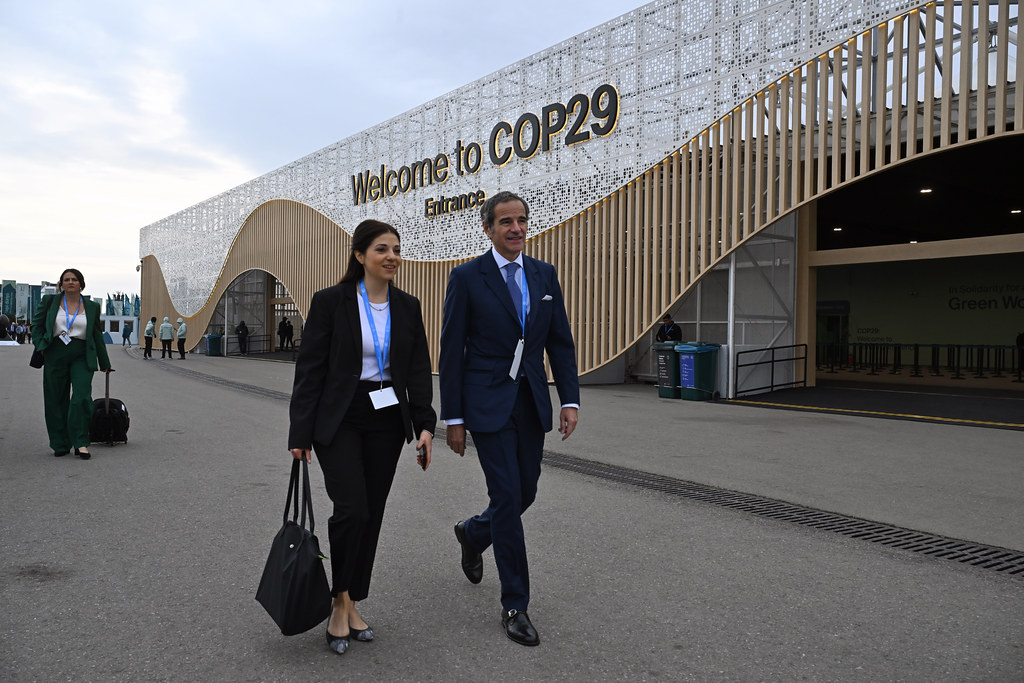
(Credit: Dean Calma)
What, then, remains of hope for the future of COP? Should we not take the $300bn of annual aid as a significant achievement from the conference? After all, it triples the previous $100bn promise from 2009. With COP29 being dubbed the ‘finance COP’ heading into Baku, it is difficult to disregard this increase as a total failure of the conference’s ability to cooperate between developed and developing countries in the fight against climate change. Delegates from the developed countries committing the financial aid would argue that it is more transparent to commit to an attainable lower figure rather than make larger false promises, especially during times of economic stagnation among the largest contributors, such as the EU.
Further hopes for the future of COP in the wake of an incoming Trump presidency could perhaps be found across the Pacific in China. Whilst China has enjoyed exemption from responsibilities to cut emissions and provide financial aid to developing countries due to its position within the UN as a ‘developing country’ itself, despite its huge rise as an economic superpower, there is a quiet hope that China could fill the potential void caused by the US in climate action cooperation. After all, China has become a world leader in clean energy production, with the International Energy Agency predicting the country will produce almost 60% of new renewable energy capacity worldwide between now and 2030. In what has been called the ‘green industrial race’, China has soared ahead of the US and the rest of the developed world.
However, whilst the moment was ripe for China to establish itself as a leader on climate action at COP29, little meaningful progress was made. The conference’s expectation for the UN’s ‘developed countries’ to provide funds to developing countries dealing with climate change was expanded to encourage developing countries to also provide funds on a ‘voluntary basis’, in a bid to include China. The reluctance from China to commit to any concrete funding plans suggests they are not yet prepared to seize the opportunity to lead climate action despite their huge increases in clean energy. The future of leadership for COP30 and beyond seems to be more uncertain than ever before.
When delegates arrive in Brazil for COP30 in 2025, it will undoubtedly follow another year of global devastation caused by climate change. Whilst there is hope that Brazil will take their role as a host nation more seriously than Azerbaijan and the UAE, encouraged by promising comments from the Brazilian government on climate action, there is still much uncertainty around the conference’s future. Will the US show any willingness to cooperate with the conference under the Trump administration? Will the conference once again be used as a trading floor for the world’s largest oil and gas companies? Will the increased finance promises made at COP29 be met faithfully by developed countries? Will China show anything more than a superficial commitment to leadership? One thing is for certain: developing countries will once again arrive desperate for support and understanding from those countries responsible for the rise in global temperatures.
Despite all the failings, hypocrisy and sense of despair which clouded COP29, developing countries must be pragmatic in accepting that the conference is their best and perhaps only chance at receiving compensation for the disproportionate effects of climate change felt, whilst also accelerating the hopeful transition to clean energy worldwide.
With the need for climate action emphasised by scientists as more urgent than ever, it is hard to overstate the bleak reality of just how fragile the future is for the UN’s Climate Change Conference.




Leave a comment