Image Credit: Public Domain.
By Aaron Belfield
“There lies before us, if we choose, continual progress in happiness, knowledge, and wisdom. Shall we, instead, choose death, because we cannot forget our quarrels?”
– The 1955 Russell-Einstein Manifesto, on the dangers of nuclear catastrophe.
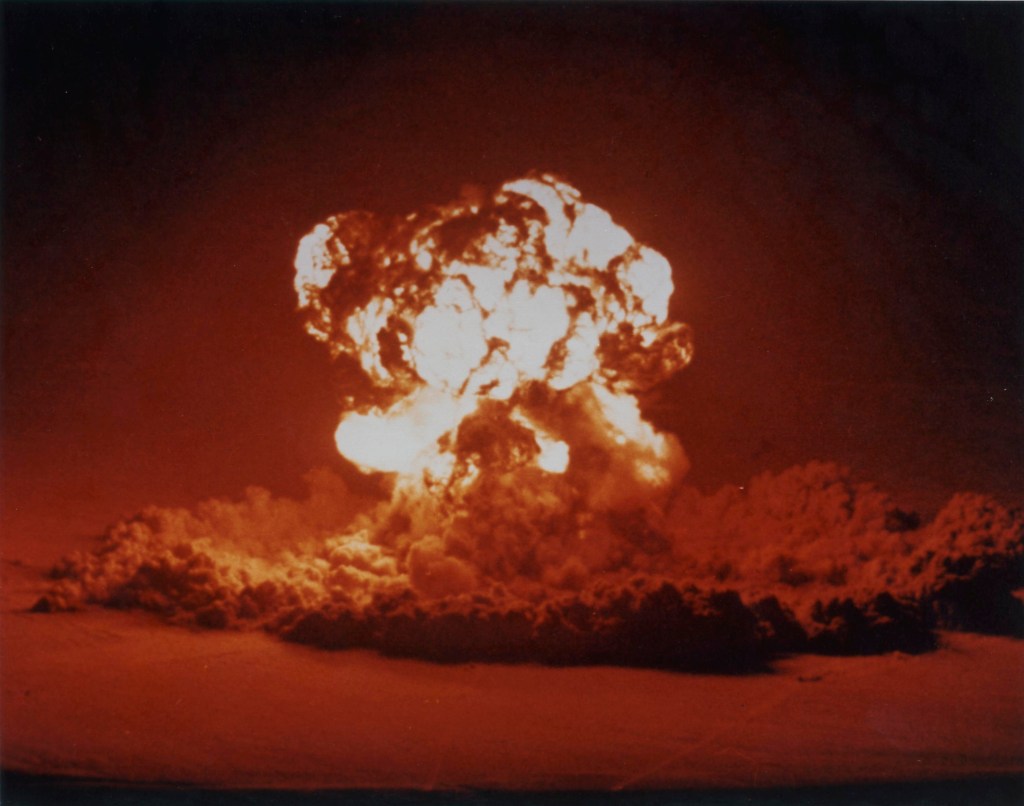
On July 16 1945, the Manhattan Project successfully detonated the world’s first atomic bomb in the New Mexico desert, introducing the world to the hugely destructive potential of nuclear fission. Few moments in world history have ever been so consequential. Just 21 days later, the US dropped the atomic bomb Little Boy over Hiroshima, unleashing the devastation of nuclear warfare onto humanity for the first time. The bombing of Nagasaki followed three days later. Fusion followed fission, bringing even more apocalyptic potential into the world in the form of the hydrogen bomb, as the nuclear arms race between the US and Soviet Union accelerated throughout the fifties and sixties. The spread of nuclear weapons during the Cold War irrevocably changed the psychology of war and brought the prospect of nuclear annihilation into every household across a world which would now forever tremble on the edge of a self-inflicted cataclysm.
Now, 80 years after the Trinity Test, after narrowly surviving the Cold War and enjoying a period of relatively successful non-proliferation efforts, the world once again seems to be on the brink of further nuclear proliferation amid heightened tensions across Europe and the Middle East. This article will first briefly explore the arguments in favour of nuclear proliferation, before contrasting these with the complicated history of non-proliferation efforts. I will then discuss the current challenges to global non-proliferation, stemming largely from the increasingly multipolar international system and US foreign policy under President Donald Trump, highlighting the dangers of potential nuclear proliferation and erosion of anti-nuclear norms across the globe.
In Favour: Mutually Assured Destruction
Despite the destruction at Hiroshima and Nagasaki, there are some who argued that the spread of nuclear weapons would increase global stability. The most prominent argument came from American political scientist Kenneth Waltz, representative of the defensive realist school of international relations, who argued that the spread of nuclear weapons ought to be welcomed rather than feared. In his rather helpfully-titled work ‘The Spread of Nuclear Weapons: More May Be Better’, he argued that states act more carelessly when the costs of war are low and act with far more diligence if the consequences are high. The uncertain threat of annihilation makes it impossible to make rational predictions when going to war with a nuclear-armed state, therefore incentivising restraint in the international system. It follows, according to Waltz, that states will seek to acquire nuclear weapons as a deterrent to other nuclear states, especially if their adversaries possess a nuclear arsenal or if they are without a nuclear-armed ally.
This argument is often known as ‘nuclear deterrence theory’, where states develop a nuclear-armed deterrence system to prevent another nuclear state from launching pre-emptive strikes to neutralise their nuclear capacity. A nuclear deterrence system must be able to survive a pre-emptive attack to be able to launch retaliatory strikes, hence why states often keep nuclear warheads on covert submarines, such as in the UK’s Trident Programme. The prevalence of deterrence systems across nuclear states arguably prevents other nuclear states from launching pre-emptive attacks due to the uncertain risk of Mutually Assured Destruction (MAD).
It is easy to see how this argument has attracted considerable support and has been influential in the creation of nuclear doctrine. Indeed, the MAD doctrine informed much of the US and Soviet Union’s deterrence strategy during the Cold War and remains hugely influential today. Supporters of the argument often point to the lack of conflict between nuclear powers since 1945 and argue that deterrence policy prevented the outbreak of a direct conventional war between the US and Soviet Union. However, as this article will later argue, the increase of independent nuclear states in an increasingly multipolar international system challenges the assumption that nuclear deterrence policy increases global stability.
Non-proliferation: Cooperation or coercion?
Whilst structural realists welcome the spread of nuclear weapons, the history of non-proliferation efforts suggests that states have not always sought to acquire nuclear weapons to increase state security. Rather, there is a surprisingly large history of cooperation between nuclear and non-nuclear states to encourage non-proliferation. The International Atomic Energy Agency (IAEA) was formed in 1957 and relies on state cooperation to monitor and inspect nuclear weapons programmes and to ensure that states are using nuclear energy technology safely. Additionally, the creation and endurance of Nuclear-Weapon-Free-Zones across the southern hemisphere points towards the presence of anti-nuclear norms across the many signatory states. The strength and expansion of NATO following the Cold War has, at least until recently, provided stable protection across Europe through its deterrence strategy courtesy of the US, UK, and French nuclear arsenals. Finally, the most well-known move towards non-proliferation is the Treaty on the Non-Proliferation of Nuclear Weapons (NPT), which entered into force in 1970 and has 191 member states, aiming to prevent the spread of nuclear weapons under the supervision of the IAEA.
However, whilst voluntary international cooperation has certainly been successful in limiting the spread of nuclear weapons, it only tells half of a much more complicated story. One might quickly object that the promotion of non-proliferation through international institutions is simply evidence of the nuclear states of the 20th century seeking to reinforce their power in the international system, such as the NPT effectively legitimising existing nuclear arsenals whilst preventing other states from developing their own. This is arguably a tradeoff associated with non-proliferation, as it reinforces the existing international hierarchy through maintaining the hard power and institutional power of nuclear-armed states. Of course, many will find this tradeoff reasonably acceptable if it ultimately reduces the potential for nuclear proliferation and the dangers that come with it.
There is also the question of what happens when states do not cooperate with international non-proliferation institutions. When cooperation fails, nuclear states have often turned to coercive diplomacy through threats of sanctions, international isolation and even military action to prevent new states from acquiring nuclear weapons. Recent history has provided us with plenty of examples to draw from. The fears over Iraq possessing nuclear weapons, which contributed to an aggressive sanctions regime and military invasion, were largely due to the huge moral panic about the consequences of a state with links to terrorist organisations gaining access to nuclear warheads. Nine months after the 2003 invasion of Iraq began, Libya gave up its nuclear weapons programme in a decision which was arguably at least partially influenced by witnessing the overthrow of Saddam Hussein in Iraq. The subsequent inspection of Libya’s nuclear weapons programme, alongside extensive intelligence cooperation between the US and UK, was later central to uncovering the infamous A.Q Khan Network, in which the Pakistani nuclear scientist Abdul Qadeer Khan had sold components and documents to aid nuclear weapons development in Libya, Iran, and North Korea. In 2006, North Korea became the first state in President George H.W Bush’s ‘Axis of Evil’ to successfully test a nuclear weapon and now routinely fires ballistic missiles capable of carrying warheads towards Japan.
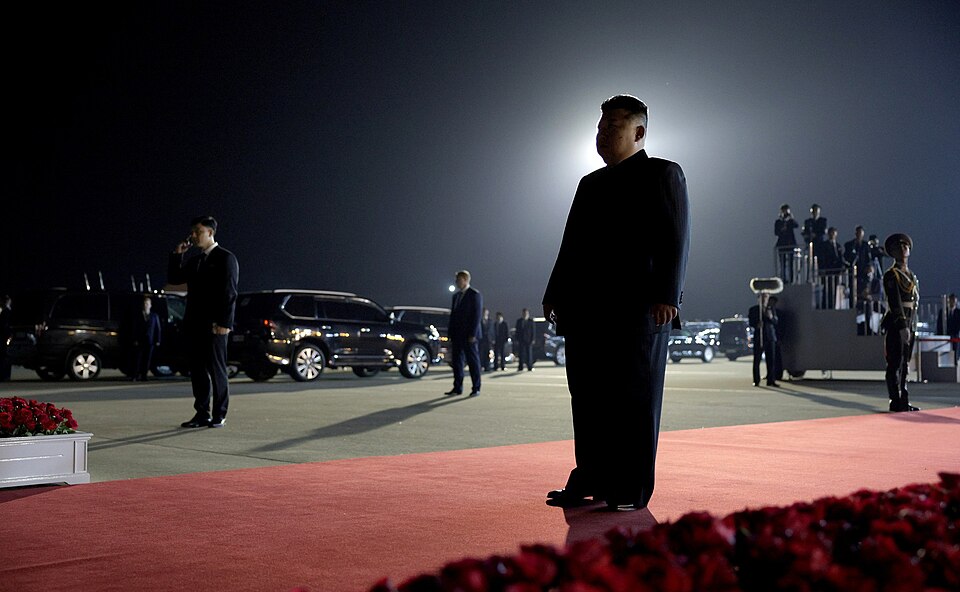
The history of non-proliferation is far more complicated than one can give justice to here, however the above discussion should highlight the point that successful international cooperation is highly dependent on voluntary participation from states. When states decide to reject anti-nuclear norms and develop nuclear weapons, especially if they are deemed ‘extremist’ or ‘rogue’, cooperation can quickly give way to coercion. Of course, many would argue that the dangers of nuclear weapons falling into the ‘wrong’ hands necessitates the use of military force to prevent hostile states or non-state actors posing a global nuclear threat. After all, it is incredibly difficult to put the nuclear genie back into its bottle once a state has acquired active nuclear weapons – though South Africa provides an exception and post-Soviet states faced practically insurmountable difficulties in keeping their warheads, these examples are unique. It is, therefore, not simply new states possessing nuclear weapons which can significantly increase global tensions and instability, but the response from nuclear states to those which are suspected to be developing nuclear weapons.
Ultimately, the decline in international cooperation and increase in overtly coercive diplomacy over recent years is the source of many concerns about nuclear proliferation which this article will now discuss.
Putin, Trump, and the rupturing global order
Whilst the end point of the US’ ‘unipolar moment’ is hugely contested, the rise of China in the late 2000s and Russia’s 2014 annexation of Crimea certainly signalled that the US was no longer the only major power seeking to exert influence in the international system. The subsequent 2022 invasion of Ukraine and the 2021 withdrawal of American troops from Afghanistan cemented the collapse of US global hegemony and hailed the existence of a new multipolar world.
However, the Biden administration’s resolute support for Ukraine and commitment to NATO arguably strengthened collective European defence against Russian aggression. Despite the world becoming increasingly multipolar and unstable, many had hoped that the US’ nuclear umbrella across Europe and East Asia would provide security against new threats in the international system. Yet the Biden administration’s work to revitalise NATO was immediately undone by Donald Trump upon re-election in 2024.
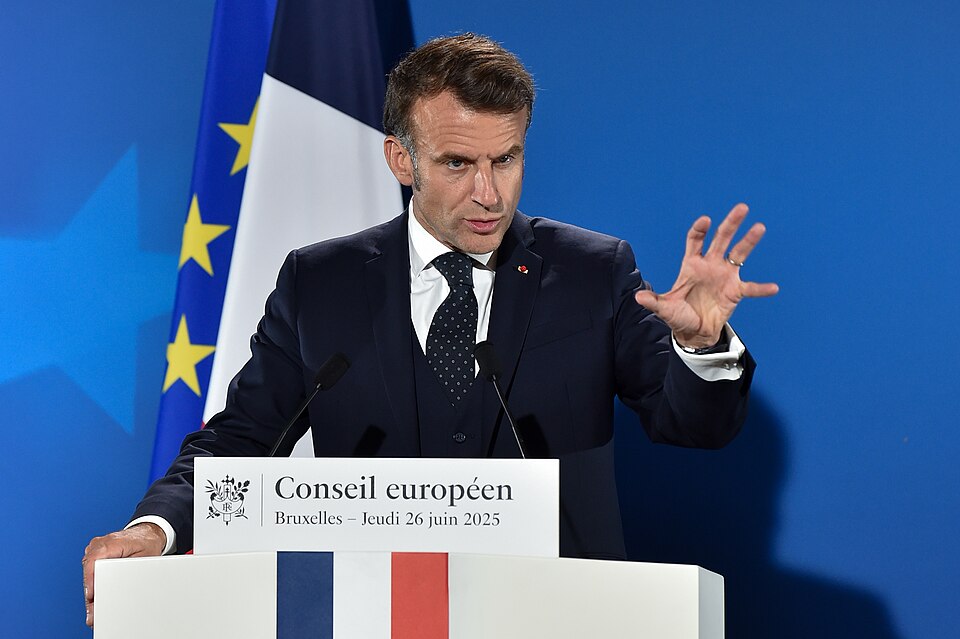
European security now seems to hang on by a thread as the US has continually criticised and disrespected European states in their commitment to defence and to supporting the US abroad in bizarre attempts to revise the history of NATO cooperation. In response to the US’ new unpredictable foreign policy, Europe is now seeking to reinforce its nuclear deterrence amid fears that the US will pull the plug on NATO and leave former-Soviet states exposed to Russian aggression. In March 2026, Macron announced sweeping changes to France’s nuclear doctrine, aiming to increase the number of French warheads and to coordinate its deterrence with non-nuclear European states. As France is the only European state with a fully independent nuclear deterrence (the UK, rather embarrassingly given current circumstances, leases its Trident warheads from the US), it is currently the only alternative in Europe to protection from the US’ nuclear umbrella.
Another possibility is other European states building their own nuclear deterrence. Poland, which shares its border with Ukraine and the Russian-aligned Belarus, has recently signalled its intention to pursue developing its own nuclear weapons in light of the US’ recent behaviour. It is clear that European nuclear deterrence is now more fragile than ever before: at least during the height of the Cold War Europe had the reassurance of US protection. Ultimately, Europe seems to be on the precipice of further proliferation to defend itself in the new multipolar world.
For decades, western politicians and commentators have strongly argued that Iran presents the biggest threat to global nuclear non-proliferation. Indeed, evidence from the IAEA and A.Q Khan Network suggests that Iran previously sought to develop nuclear weapons until the early 2000s before such efforts were uncovered. Iran subsequently participated in limited (albeit inconsistent) international cooperation, such as the Obama administration’s nuclear deal in which Iran agreed to constrain its nuclear programme in exchange for sanctions being lifted. However, the hope of closer cooperation was soon quashed during the first Trump administration when the deal was abandoned in favour of coercive sanctions, which arguably pushed Iran to intensify its alleged covert nuclear programme. The collapse of cooperation and intensifying of coercive diplomacy in the Middle East continues to be a huge blow to international non-proliferation supporters who hoped for a peaceful solution to the prospect of a nuclear Iran.
In February 2026, the Gulf erupted into a sprawling regional conflict following US-Israel strikes against the regime, as Iran retaliated by striking states housing US forces in the region. If previous US strikes against Iranian nuclear facilities the year before were not a red line for the regime, the elimination of almost the entire leadership and intense bombing campaign will almost certainly push Iran to develop an intense nuclear programme if the state can survive the conflict – contrary to the US war aims.
I would argue, however, that the damage to non-proliferation extends far beyond the prospect of preventing Iran from developing the bomb. Even if the US is successful in destroying Iran’s nuclear potential through military force (at great cost to the Iranian people), the damage to the infrastructure, economies, and reputations of the surrounding Gulf states could undo years of strategic and economic cooperation with the US. The undermining of state sovereignty and international law by the US in Iran and Venezuela, alongside fracturing its relationship with its closest allies in Europe, could push the Gulf states to seek alternative security solutions as the US continues to sink its international reputation. Saudi Arabia has repeatedly stated that it will pursue nuclear weapons if Iran produces them first, however a collapse in trust between the US and Gulf states (as the conflict with Iran extends) could easily push them to build nuclear weapons regardless. With Saudi Arabia and the UAE already possessing advanced civil nuclear technology, the potential for nuclear weapons development is not as far-fetched as it might first appear.
As the US continues its cavalier foreign policy across all corners of the globe, from military interventions to spontaneous tariff regimes, it is clearly becoming an untrustworthy guarantor of nuclear deterrence. The nuclear umbrella which once protected Europe and East Asia is now falling away whilst Russia and China ramp-up efforts to assert regional dominance.
The dangers of nuclear proliferation
Whilst the above discussion suggests that the world is once again on the verge of further nuclear proliferation in an increasingly multipolar international system, many might ask why this is dangerous and not to be welcomed. Returning to the structural realist argument, one might argue that the current conflicts are actually a consequence of non-proliferation. After all, John Mearsheimer, Professor of Political Science at the University of Chicago (and representative of the closely-related offensive realist school) has long argued that both Ukraine and Iran should possess nuclear weapons to increase stability in Europe and the Middle East. With both regions now battlegrounds for Russia and the US, it is hard to argue that non-proliferation has been successful at limiting international crises. However, I will argue that both the offensive and defensive realist arguments in favour of proliferation are unsuitable to the new multipolar world, and that further proliferation also risks lowering the threshold for aggression and the use of nuclear weapons.
The Cold War arguably brought the world as close as it has ever been to a self-inflicted nuclear catastrophe as the two major powers faced off for over four decades. However, in the bipolar world of the Cold War, the standoff consisted of two nuclear powers vying for influence across the globe. The nuclear faultline therefore consisted of two rival nuclear doctrines which were constantly directed at the other power, even through the use of proxy states. Following the Cuban Missile Crisis, the US and Soviet Union established the 1963 Washington-Moscow hotline to increase transparency between the two states and reduce the possibility of accidents occurring with unprecedented consequences.
In a multipolar world however, the increase in faultlines between multiple nuclear powers makes it difficult to coordinate nuclear policy and transparency between states who are constantly focused on multiple threats which operate independent nuclear doctrines. Even the existence of independent nuclear doctrines among alliances can increase the room for accidents as different states have different red lines. Indeed, an uncoordinated nuclear doctrine in Europe between France, the UK, and US is seemingly a real possibility as France seeks to expand its independent deterrence. Even Waltz himself argues that identifying dangers and threats in a multipolar world are “matters of uncertainty” as responsibilities and state interests across the globe become blurred.
An additional problem is the increase in the use of Artificial Intelligence by state militaries to coordinate defense systems and influence military doctrine. A worrying study from King’s College London found that AI in war game simulations chose to threaten nuclear strikes in 95% of scenarios. A multipolar world in which independent nuclear states are focused on multiple threats and are embedding potentially risk-tolerant AI programmes into simulations or even nuclear detection systems could vastly increase the risk of nuclear conflict far beyond the risks of the Cold War.
Another danger of further nuclear proliferation is the potential for the threshold for aggression to become lowered as nuclear weapons become more normalised in the international system. This arguably has consequences for conflict between nuclear states and between a nuclear and non-nuclear state. Whilst two nuclear states have never directly declared war against each other, the Cold War included multiple proxy conflicts across East Asia and the Middle East. More concerningly, Pakistan and India have engaged in direct military conflict multiple times since they both acquired nuclear weapons, making escalation a huge risk. One might argue that the presence of nuclear weapons worked to limit escalation, however the presence of two nuclear powers engaging in conflict arguably weakens the norms against nuclear states engaging in direct conflict, which could increase the possibility of similar situations elsewhere. This can easily be seen in Eastern Europe, where NATO fighter jets are repeatedly scrambled as Russian aircraft and drones have crept closer to NATO airspace during the Russo-Ukrainian war.
It is clear that norms against aggression and provocation between nuclear powers have been weakened since the rise of a multipolar international system. However, Waltz argues that fears of automatic nuclear annihilation upon two nuclear powers waging conflict are overexaggerated. Instead, he argues, nuclear states with such lethal capacity will be incentivised to show restraint to limit the costs of war, rather than launch a widespread nuclear exchange. One might point to the famous case of Vice Admiral Arkhipov declining to launch retaliatory strikes from his Russian submarine as an example of such restraint. There are other similar examples from throughout the Cold War to defend this argument. However, the fate of eight billion people may not be best left at the behest of a few military commanders exercising moral restraint and goodwill across an increasing number of nuclear powers. An international system in which nuclear states push the boundaries of aggression and are left to call each others’ bluff seems to be a suboptimal way of upholding international stability and safeguarding humanity.
Perhaps the most worrisome development over the last few years has been the increasing use of the term ‘tactical nuclear strike’ in the wake of conflict in Ukraine and Iran. The term is often used to describe the use of a nuclear weapon against a non-nuclear state to force the victim into subjugation. The bombings of Hiroshima and Nagasaki, one could argue, were simply ‘tactical strikes’ which resulted in the deaths of well over 100,000 civilians. As anti-nuclear norms are reduced amid further proliferation, nuclear weapons are further legitimised in the international system as a ‘weapon’ of war for aggressive states to achieve military aims. Referring again to the above-mentioned study, AI systems which promote the use of tactical nuclear weapons could only increase this risk. Ultimately, the dangers posed by further proliferation in a multipolar world are colossal, and they demand the international community to act fast to prevent the world slipping closer to the potential for untold catastrophe.
Is it too late?
The world seems poised on the precipice of uncertainty. The consequences of further proliferation in an increasingly multipolar international system threaten both the influence of global anti-nuclear norms and future international stability. There is still time for the world to regain control over non-proliferation, such as by renegotiating expired arms control treaties, reinforcing the strength of the NPT, and upholding anti-nuclear norms. However, it is hard not to feel as though the non-proliferation movement is not being blindsided by the fast-moving picture of global politics. The non-proliferation movement of the late 20th century carried with it a cultural momentum across the airwaves and cinema screens as the devastation of Hiroshima and Nagasaki remained burned into the minds of a generation. Echoed by Kubrick’s Dr Strangelove and Nena’s 99 Luftballoons, the world was constantly reminded of the catastrophic potential first unleashed into the world in the desert of New Mexico. As the events of August 1945 and the Cold War slip further into distant memories, nuclear weapons continue to be reduced down to statistics and temporally distant images of mushroom clouds rising over deserts and oceans. If progress is to be made in stopping further proliferation, the world will once again have to remind itself of the grave danger nuclear weapons pose to humanity.




Leave a comment