
(Photo: CCL)
By Finn Sadler – Editor-in-Chief
Throughout their tenures as leaders of their respective parties, Prime Minister Rishi Sunak and Leader of the Opposition Keir Starmer have shared a primary goal: to distance themselves from their parties’ populist pasts. After the Labour Party suffered its most significant electoral defeat since 1935 and after the Conservative Party became synonymous with sleaze and mismanagement, members of both parties provided Starmer and Sunak with a mandate to rebrand their parties in the pursuit of electability. But have their efforts truly been successful in ridding the spectre of populism from British politics? This article will examine the strategic choices made by both parties in their efforts to rebrand, and it will explore the degree to which these tactics have been successful in mitigating the influence of populism on the British political landscape.
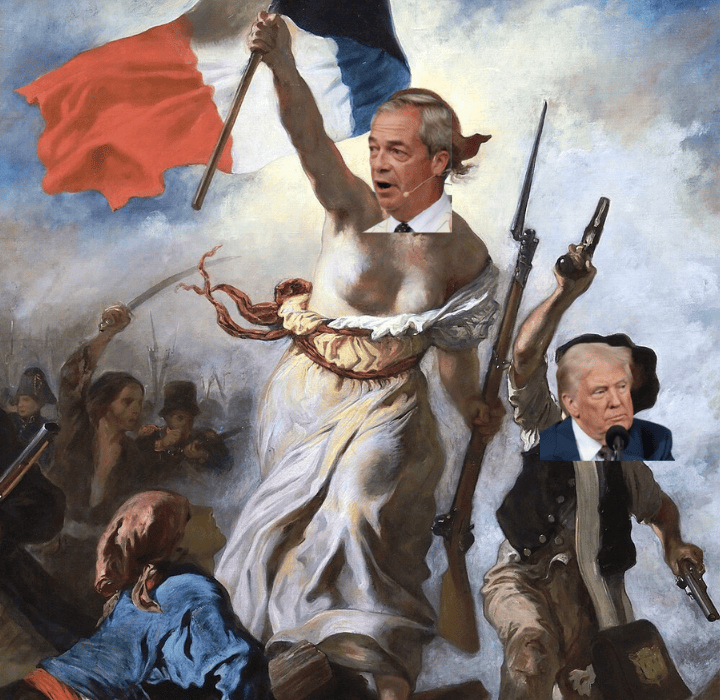
Populism, defined by Cas Mudde as an ideology that considers society to be ultimately separated into two homogenous and antagonistic camps (“the pure people” and “the corrupt elite”), began to take root in the modern Conservative Party after the UK voted to leave the European Union. The leave campaign, headed by Nigel Farage and Dominic Cummings, was built on the premise that the ‘elites’ of politics had surrendered British sovereignty to another elitist group in Brussels and that such a handover was in direct opposition to the interests of ‘the British people’. The referendum result created a mandate for the Conservative Party to implement a policy manufactured by populism; this warranted its implementation to be driven by populist tactics in order to maintain its popularity with voters who had supported leaving the EU. The strategic importance of this course of action was best demonstrated by Theresa May’s shortlived attempt to implement Brexit without resorting to populist tactics and her ousting that followed. Considering this, successive leaders Johnson and Truss realised that in order to maintain power, they would need to continue using the populist tactics that had helped bring about Brexit, thereby cementing populism as the go-to strategy within the party.
Jeremy Corbyn’s election as leader of the Labour Party in 2015 was supported almost entirely by party members and opposed almost completely by the party’s parliamentary elite. This dynamic aptly reflects the foundation of Corbyn’s campaign, which he described as an attempt to “give Labour Party members a voice” but, in more transparent terms, could be described as an attempt to target disillusioned left-wing voters who had fallen out with politics after years of soft-left New Labour and centre-right ‘compassionate conservative’ governance. This rhetorical appeal to the masses on which he formulated his campaign coincided with a series of ideologically fuelled policy aspirations, such as the restoration of Clause IV, an article which outlined the party’s commitment to common ownership of the means of production. Corbyn’s self-portrayal as a man of the people, typified by his scruffy, unorthodox appearance designed to echo his equally unorthodox political views, proved to be a popular strategy in winning the support of left-wing voters, leading many Labour parliamentarians to adopt similar populist tactics, resulting in a decisively populist Labour Party.
The performative nature of Johnson and Truss’s leadership proved to be disastrous for the Conservative Party. Johnson was accused of being deceptive in matters of both policy and conduct, and Truss’s populist economic plans to cut taxes completely tanked the economy and took the Conservative Party’s performance in the polls down with it. As for Corbyn, his long-held eurosceptic beliefs began to sever connections with his broad Europhile support base, and his efforts to mitigate this only resulted in accusations of unclarity. Consequently, this, alongside other factors, resulted in the Labour Party securing its worst election defeat since 1935. Both parties’ new leaders have pledged to break with the populism of the past, but have they been successful?
In the name of electability, Keir Starmer has removed the whips of numerous previous leadership heavyweights, including Corbyn himself and his shadow home secretary, Diane Abbott. Although these decisions may be seen as a rejection of populism, Starmer’s efforts to rebrand the Labour Party have been hampered by his continued use of populist rhetoric, namely the reliance on emotional responses, causing him to fall into the same traps as his predecessors. The infamous’ attack ads’ that accused Rishi Sunak of being on the side of child abusers were undoubtedly intended to provoke outrage and boost support for the party. But the ads also provoked outrage directed towards the tactics themselves, which was likely part of the plan. The widespread condemnation these ads received have brought them to the forefront of public perception, stimulating discussion around Sunak’s record on crime. Starmer’s continued use of polarisation as a tactic in his campaign highlights how deeply populism has rooted itself in British politics.
Similarly, Rishi Sunak has also relied on emotional and polarising tactics that bring into question whether he really is so different to Truss or Johnson. Sunak, and home secretary Suella Braverman, have constructed a new ‘politically correct’ elite against whom they can direct their anger and rally support. For Sunak, this politically correct elite is responsible for allowing “predominantly Pakistani” grooming gangs to carry out their crimes. Moreover, though factually inaccurate, the emphasis on the racial aspect of these gangs directly mimics the rhetoric used by notable populist and former leader of the EDL, Tommy Robinson. Suella Braverman’s labelling of those fleeing conflict as constituting an “invasion”, combined with her habit of grossly overestimating the numbers of refugees who are likely to arrive in Britain, represents another expression of populist rhetoric and the perceived need to appeal to a nationalist, disillusioned class within the UK in order to win the next election.
Clearly, despite Sunak and Starmer’s promises, it appears that populism in some form or another has entrenched itself in the political landscape and may persist for some time. Both party leaders clearly feel that running on polarisation is a crucial campaign strategy for the upcoming elections, raising concerns about how long it will take to restore a reasonable and rational form of political discourse.



Leave a comment