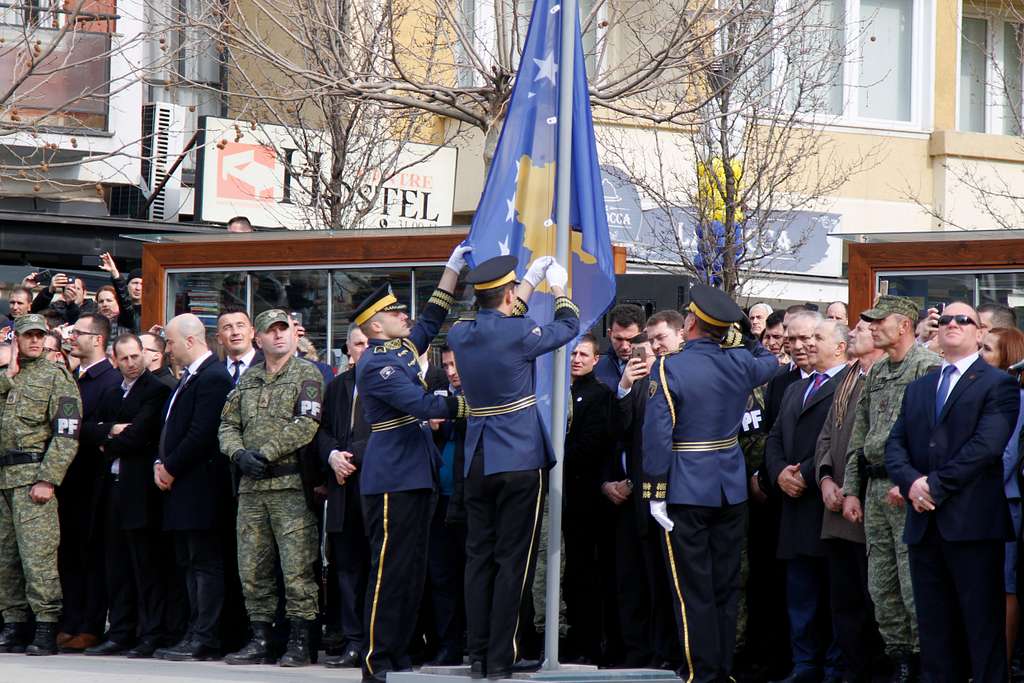
Image credit: Public Domain.
By Ethan Peacock
I would like to dedicate this article to my Uncle, who was himself heavily involved in the most recent war in Kosovo, which lasted from 1998-9.
Most of us Europeans are obsessed with our history, but why do we never seem to learn the lessons of the past? The Russian invasion of Ukraine has certainly brought back some deeply unpleasant memories of previous conflicts, and so, many European leaders are rightly focusing their energies on minimising this threat and achieving some sort of positive outcome. However, in a much neglected corner of Southeast Europe, where the Continent’s last major war occurred less than thirty years ago, and where tensions ostensibly remain frozen, things could once again be about to heat up. But the future of Kosovo, and of the western Balkans more generally, will depend on several external factors, especially on how the war in Ukraine is resolved, and on whether the United States, under the Trump administration, continues to detangle itself from European defence. Indeed, given the new precedent set by the behaviour of President Trump and Russia’s President Putin, Kosovo will arguably function as a test case to see if sovereign borders, and respect for an international rules based order, actually still matter in Europe, or whether such fanciful notions will be consigned to the dusty attic of ancient history.
The conflict in Kosovo, and the turmoil that befell the former Yugoslavia during the 1990s, was never really brought to a satisfactory resolution, and the ethnic divides cemented by cynical nationalist leaders, between groups who had once shared a single nation without too much trouble, remain ever present. Kosovo’s unilateral declaration of independence from Serbia in 2008 was met with partial international recognition, including by the United Kingdom, the USA, and the European Union, however, Serbia naturally refused to play along. Indeed, Serbs still constitute a significant minority in the north of Kosovo, around 5% of the total population, but the outcome of the war of 1998-9 resulted in the mass-expulsion of around 200,000 from the territory, which also involved other ethnic groups who were not part of the Kosovar Albanian majority. The Kosovo Liberation Army (KLA) and their supporters had been seeking independence from Yugoslavia since the abolition of Kosovo’s autonomy in 1989 and the war and its horrific aftermath were a culmination of the struggle between the KLA and the Serb dominated Yugoslav army. As with nearby Bosnia and Herzegovina, such a grave humanitarian catastrophe, and continued interethnic violence prompted intervention by the International Community, particularly from the EU and the United Nations, whilst NATO’s Kosovo Force (KFOR) still plays an important role in assisting the Kosovar government’s developing security strategy. Since 2008, Kosovo’s government has attempted to assert control over Serb majority areas in northern Kosovo, leading to frequent protests by a population that largely continues to look towards the Serbian capital, Belgrade, maintaining its own separate institutions and refusing political representation in Kosovo’s parliament. Fears have thus been mounting that a lessening international presence in volatile northern areas could quickly result in an unwelcome return to armed conflict.
The government in Belgrade has expressed solidarity with ethnic Serbs in northern Kosovo, and has always viewed Kosovo as an integral component of its territory. Kosovo is seen by many as the “cradle of Serb civilisation” and was the site of several pivotal moments in Serbia’s history, including its 1389 defeat and subjugation by the Ottomans, a historical grievance which acts as a powerful domestic political tool in a society where nationalism still informs much of public discourse. Serbia has frequently engaged in military posturing near the border with Kosovo and, in September 2023, was accused of sponsoring an attack on a Kosovo police unit by Kosovo Serb militants. However, the Serbian government faces a difficult balancing act, and an outright assault on Kosovo’s territory would be unlikely to benefit Serbia in the long-term. Whilst their traditional Slavic, Orthodox guarantor Russia appears interested only in destabilising Europe, and so would probably welcome Serbian aggression, any invasion would risk jeopardising the valuable support Serbia receives from both China and the EU. This is because financial assistance from China, a country whose current economic policy does not favour instability, has become increasingly fundamental to Serbia’s infrastructure. Also, both Serbia and Kosovo remain, in theory at least, candidates for accession to the EU, and the EU continues to reinforce Kosovo’s governmental institutions through its “EULEX” initiative. Despite this delicate tightrope walk between East and West, lingering resentment towards the Western powers for their role in the Kosovo War, and the NATO bombing of Serbia, dictates that a test of Western resolve is nonetheless still very much on the cards.
Putin’s 2022 invasion of Ukraine may seem unrelated to any crisis in Kosovo. After all the two nations are hundreds of miles apart. However, not only do both situations pose fundamental challenges to Europe’s post-Cold War security, but the precedent set down in Ukraine, that international borders can effectively be changed by force, might potentially inspire some within the Serb leadership to take their chance, and turn a distant dream into a reality. Indeed, if Russia is allowed to succeed in its ambitions, revisionist states will become emboldened, and Europe will be further destabilised, thus playing right into the hands of Moscow. Furthermore, Russia’s strategic interest in the Balkans, and its historical and cultural ties to Serbia, mean that a conflict in Kosovo would present a relatively straightforward, low-cost way to undermine the Europeans on yet another front, distracting them from continued Russian aggression in Ukraine, and potential military activity in the Baltic. Given the significant NATO presence in Kosovo, a full-blown war in the Balkans could result in Western troops directly confronting their Russian counterparts, quite possibly without American assistance, a scenario which begs serious questions about Europe’s combat capabilities and readiness to operate as a single force.
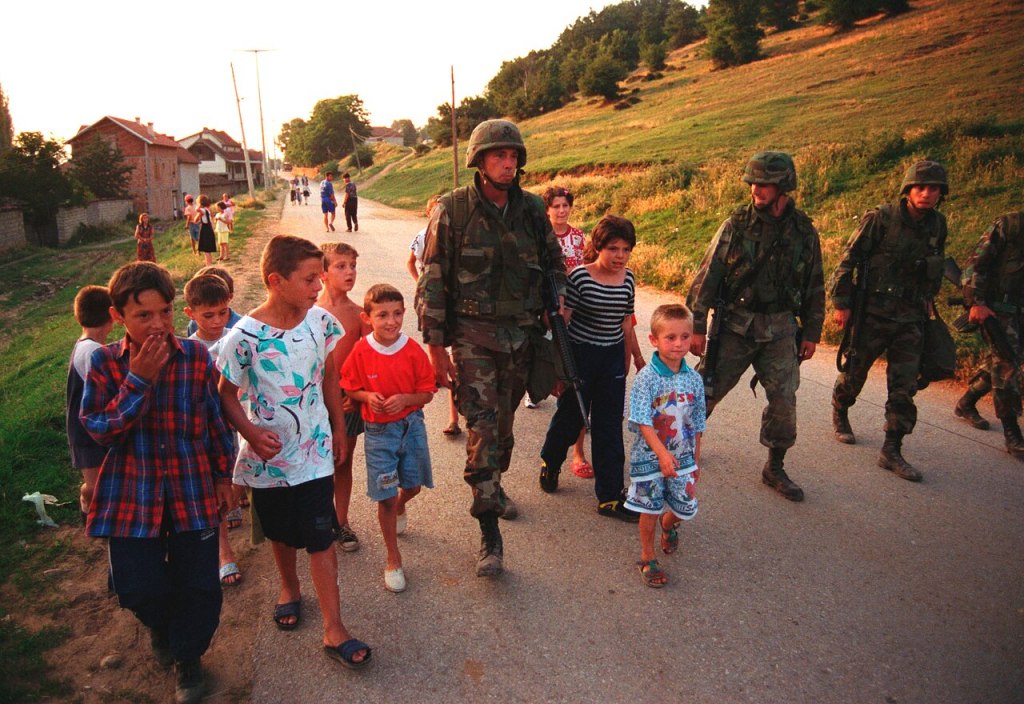
During the last war in Kosovo, the Americans played a crucial role in determining the outcome of the conflict, which ultimately favoured Kosovar independence. However, the days of Clinton’s “liberal interventionism” are well and truly over, and America’s slow retreat from European and NATO commitments undoubtedly leaves Kosovo vulnerable to exterior threats. Donald Trump’s scepticism – nay, open contempt – of NATO has rapidly accelerated this process, particularly given his constant undermining of the alliance through his confrontational stance on Greenland, and his distasteful insults of fellow NATO soldiers. America’s protection of NATO states through Article 5, which dictates that an attack on one NATO member is considered an attack on all, can no longer be guaranteed, even though the only time this article has ever been invoked was to aid American foreign policy in the wake of 9/11. This major uncertainty fuels the confidence of NATO’s adversaries, in this case Russia and Serbia, thus increasing their willingness to gamble, as we have seen in Ukraine. Russia’s annexation of Crimea in 2014 resulted only in European complacency, and it is safe to say that this complacency also exists when it comes to potential Serbian aggression in Kosovo. However, American disengagement with Europe, notably under Trump, may prompt Europe’s governments to rethink their approach to the behaviour of Russia and its allies. The coming months and years will see whether this materialises, but European efforts to wean themselves off the American umbrella of defence remain lacklustre to say the least.
Just as Ukraine has tested European responses to conflict on the continent, so too would any future crisis in Kosovo. Since July 2022, we have seen an escalation of tensions between the government in Pristina and the Kosovo Serbs in the north, following the end of an agreement that allowed the use of Serbian issued car license plates in the border region. The subsequent boycott of local elections by Serbs then resulted in Kosovar Albanian mayors being chosen to administer Serb majority municipalities, thus heightening civil unrest. These disturbances worsened after Kosovo’s government decided to abolish the use of the Serbian Dinar as legal currency, and to close the parallel institutions run by Kosovo Serbs. The aforementioned attack on Kosovar police in 2023 was preceded by a request from the Serbian government to deploy up to 1,000 military personnel to “restore order” in the north, although permission was denied by NATO. Given this ongoing situation, and the backlash against Kosovo’s use of force to reestablish government authority in the north, it is not unlikely that Serbia would again attempt to send its troops across the border, this time without asking for permission. Any miscalculation by NATO forces in response to this could therefore result in disastrous consequences. Of course, these are currently all just “ifs” and “mights”, but we need only look at Crimea and the Donbas before Russia’s 2014 invasion to see how a gradual escalation of civil disobedience and government crackdowns can foreshadow direct military intervention. The 2014 insurgency in the eastern Donbas saw Russian-backed separatists seizing several towns previously under Ukrainian control, a takeover which the Ukrainian government failed to reverse, and which became a springboard for full-scale Russian intervention in Ukraine in 2022. Russia’s justification for military action, through its apparent need to protect the pro-Russian separatist population, could also be applied in the context of Belgrade’s desire to protect Serbs in northern Kosovo, thus making this scenario a very plausible one.
The same devastation we are witnessing in Ukraine must not be allowed to happen in Kosovo, especially given the region’s troubled history of interethnic violence. Kosovo’s last war resulted in the deaths of over 13,000 people, most of whom were civilians, along with the mutilation, rape, capture, and ethnic-cleansing of hundreds of thousands more. From a moral perspective, the credibility of NATO and the EU would be severely weakened if this were to be repeated, whilst catastrophic strategic damage would also be inflicted, scuppering any plans of EU enlargement in the western Balkans, and allowing further Russian infiltration into Southeast Europe. Despite no longer being an EU member, the United Kingdom’s role as a NATO power means we would also likely be involved in any future war, particularly due to our long-standing historical ties to Kosovo, a prospect neither we nor our European partners can currently afford.
This hypothetical conflict is only inevitable if European leaders continue to view Kosovo as a peripheral issue. Ukraine has arguably demonstrated that achieving a lasting peace depends not on the appeasement of revisionist aggressors, but on maintaining steadfast deterrence to signal that illegally invading someone else’s territory is completely unacceptable. In spite of Trump’s attitude towards Putin, and the changing American worldview, Europe must ensure that Ukraine does not fall to Moscow, by reiterating its commitment to Ukrainian sovereignty through sustained military and diplomatic support. European strength on this front would thereby make a war in Kosovo far less likely, and would indicate to Serbia that Europe will not tolerate any kind of violent assault on smaller states. In the meantime though, bolstering Balkan security through a continued NATO military presence in Kosovo, and a more united European stance against the violation of borders would go some way to halting Kosovo’s worrying relapse into instability and unrest. For the sake of a population that has experienced unimaginable suffering and violence within living memory, failure to act decisively is no longer an option! Europe ignores Kosovo at its peril…


 The York Politics Review
Leave a comment