
Image Credit: Marc-Olivier Jodain CC1.0
YPR Editor Matthew John Nichols recently spoke to Professor Indrajit Roy, Professor Simon Parker, and Dr Ruth Kelly on the subject of hope in politics. This article is a transcript of that conversation.
Professor Indrajit Roy lectures in the politics of global development at the University of York and has contributed to publications such as BBC Radio 3 Free Thinking and the Hindustan Times. His research challenges Eurocentric and elite-centric views of development and directs attention to the agents of the Global South.
Professor Simon Parker lectures in political theory and is co-chair of the University of York Migration Network and co-director of the University of York Centre for Urban Research. His research combines critical urban studies, the politics of asylum and immigration, and comparative European politics.
Dr Ruth Kelly lectures in human rights and is Dean of postgraduate taught Politics & IR students at the University of York. Her research focuses on the intersection of cultural politics, citizenship practices, and political theory and aims to bring political theory into coherence with global struggles for justice.
. . .
Matthew: What is Hope? Do you have a working definition?
Professor Roy: At its very basic, hope is an emotion and it is an emotion that gets you to think about how the world can be a better place. It’s an emotion that thinks about how you can collectively make the world a better place. So there is an active element to hope – it’s not about waiting for something to be done to make the world a better place but it’s about what you, together with others, can do to bring that about. It’s about not tolerating injustices; it’s about fighting back against injustice; it’s about striving to redress the balance of power in society; it may not be informed by an image of the perfect world but it’s certainly built on the idea that the present world is troublesome and it can be made a better place.
Matthew: You say it’s not based on an idea of a perfect world…
Professor Roy: It need not be.
Matthew: Sorry, it doesn’t have to be, but, does it believe that a perfect world is possible?
Professor Roy: I think that’s an excellent question, and a nice way to go towards this conversation that we were having the other day about hope and utopia. I think that some of us would say that hope is what remains when utopias die. In the sense that you’ve had all sorts of utopian ideas about how the world can be made a perfect place. Whether it’s liberalism, or fascism, or socialism – all of these were utopias. But we’ve seen in the last two centuries how these have crumbled, but that hasn’t meant that people have given up the idea of a better place. So, I think that there is that distinction to be drawn about a perfect place and a better place. I don’t think that hope believes that perfection is impossible but I think it does believe that while people may be waiting for that perfect state of being, things can be done to get to it. And where this is coming from, is people saying ‘oh but whats the point of doing things because everything is so messed up anyway? How will what we do make things better?’ The response to that is while people might think about what the perfect way of living is, let’s do what we can to redress the balance of power, to think about less injustice, to think about making the world better than it is already. That’s where I would pitch this conversation between hope and perfection.
Dr Kelly: There has also been, recently, a lot of ecological work that looks at, like, there’s a phrase being used recently: ‘the arts of living on a damaged planet’, associated with Anna Tsing and Donna Haraway. There’s other ways of thinking, like there are things that we have to face like climate change, the existentialist challenges that we have to face. There are some things that we can’t do anything about, but we can still find joy and we can still do something to be humans together. That feels like a bit of a shift in the literature over the past 10 years. There has been a bit of a shift in focus, especially in the climate change world, away from kind of mitigation towards thinking about mitigation plus adaptation – but also thinking about how we live in this world as we face the challenges that we will face, and I think that’s quite different from utopian traditions in the past.
Professor Roy: I should add, in the previous list of ‘-isms’ and utopias, you know, I talked about fascism, socialism, liberalism. Capitalism is also a utopia. I mean, I don’t want to let capitalism off the hook. I think there’s a problem there as well, which hope recognises, but of course (to repeat what I said) it’s not waiting for that perfect world, it’s sort of trying to make the world a better place despite all of these ‘-isms’ negatively impacting them.
Professor Parker: I think that’s right and I think, you know, following on from Indrajit’s point, about imagining a future beyond capitalism and that also the idea that we have to think radically about how we live in the world, how we live lighter on the planet, how we live more peacefully with our fellow human beings – or we collectively won’t survive. There really is that kind of existential threat hanging over us now as a species, as an ecosystem, as the anthropocene if you like. So, I think that in some ways, this is not a ‘nice to have’ or an optional virtue. I think we would probably all agree – hope is absolutely essential if we are going to make that transition to a more sustainable future. So I think part of it is being prepared to challenge the status quo, knowing that it’s hard and to be realistic about it because if you were sure that things would change you wouldn’t need hope you would just have belief. You would just have expectation or whatever. I think that what hope implies is that this is an almost insurmountable set of obstacles that confront us either individually or within our families or within our neighbourhoods or wherever. The challenges are very real and they are difficult to negotiate but nevertheless we believe that not just individually but collectively we can surmount them and I think it’s that kind of commitment to the possibility of transformation that allows you to keep going often in very impossible, incredibly adversarial conditions. Knowing of course that this is how human beings have always overcome great challenges and great moments of disaster and, you know, threats of population extinction. There’s that famous point about Auschwitz and the German social theorist [Theodor W.] Adorno famously saying there’s no poetry after Auschwitz [“nach Auschwitz ein Gedicht zu schreiben, ist barbarisch” – After Auschwitz, to write a poem, is barbaric] and then, of course, when the camp was liberated and they started to excavate it they found that the inmates, majority of course didn’t survive, had actually buried poetry in the ground in the hope that it would be found and their memories of it and particularly what they wanted to say to their loved ones would be recovered. I think that’s quite important to recognise that even in the darkest times that’s one thing that people cling to.
Dr Kelly: There is a quote I like from a book put together by Walida Imarisha and adrienne maree brown who are very prominent in activist circles in the US and they say, “Our ancestors dreamed us up and then bent reality to create us….as two Black women, we think of our ancestors in chains dreaming about a day when their children’s children’s children would be free. They had no reason to believe this was likely, but together they dreamed of freedom, and they brought us into being.”. So that has been something that has been true throughout generations.

Matthew: Is it that I should have hope that I could change something or that I am hoping that someone else will change things? Do you have to be a participant in order to be a part of hope?
Professor Roy: That’s a really interesting way to think about this distinction between hope as ‘waiting for’ and hope as ‘waiting to’. Of course you hope that things will improve and somebody does something, but if that’s not happening then you do things along with others. So waiting is important when thinking about hope – it’s not going to happen immediately – but it’s something that you can see yourself contributing to. And I think that some of the ways that you were referring to and even the ways that the writing of poetry or imagining of a different world is very much about what we do. Or what I can do, as you said. So i think that it’s very much about what I as an individual might do or I as a member of a collective might do, but naturally if others are doing it and if they are doing a better job I don’t want to sort of come in and there is something about hubris that hope pushes back against – I don’t have to be the one with all of the answers if you are doing a better job; obviously if you are not doing a good job then I might step in. So I think there is this element of sort of doing. bell hooks talks about hope as about not giving up and not giving up entails waiting for things to happen but if things are not happening then I am also waiting to do things at the right moment of course. This whole idea about waiting to do things is about understanding what the landscape is; not being a fool and not being delusional in terms of going out and having this bravado about ‘I am the one who can do stuff’ but being realistic in your assessment about the balance of power against it, what the obstacles are, and then working strategically to overcome those. So I would think that there is an element of ‘I do’ or ‘we do’.
Dr Kelly: It is interesting though because the question is a good question and made me realise that a lot of the work in this area assumes a certain form of collaboration – being with others – and that there is an intersubjectivity about it, that is not just an individual emotion. Work on imagination suggests that imagination is something that we do together and that it’s not just an individual thing but that it is an Arendtian intersubjective translation of what we feel inside into something that makes sense to other people and that that is necessary and i think that is interesting because its not necessarily how ordinary people might understand hope. That might be more of an individual thing right, and so so much of the literature thinks of it as a collective.
Professor Roy: I think that some people have drawn this distinction between hope and aspiration, where aspiration is the individual and hope is the collective.
Professor Parker: That was going to be my point actually. I think Ruth is right, why it works better, I’m not saying it has to work exclusively in the collective, but I think it works better in the collective because there is inevitably something selfish around the personal construction of hope. Even if it’s something like ‘I hope for a child’ if you have been childless for a while; of course it’s a human thing and you can all understand it, but ultimately that is about fulfilling the aspirations or the ambitions of one individual (or a couple or whomever that may be) and that seems to me to be – I was thinking actually about the origins of it and a lot of the origins are – religious. They are about what you might call the bargain with God, and it’s like ‘If you do this for me I will be the most faithful servant you have ever had, I will pray 15 times a day, etc. etc.’ So there is something quite interesting about that sort of metaphysical level, spiritual level, which doesn’t quite translate into the material, secular world. Or if it does, it can just come across as a selfish wish for something that I don’t have, that maybe other people have, and I just want it to fall onto my lap. I don’t think that has quite the same moral authority as some of the other meanings of hope that we have been talking about which are to do with transformation to a better world. Not just improving our individual circumstances or getting something that you don’t have that you would like. So I do think when we talk about hope as a political concept or idea that’s why we generally talk about it in collective terms for the reason, as you were saying at the beginning Indrajit, it’s actually also a moral project and morality is shared – or at least in my sense of the word it is. It’s a shared characteristic of humanity that doesn’t make sense without the community,
Matthew: So it has gone from the case where it was the individual having some kind of agreement with God to the individual having an agreement with society?
Professor Parker: Yes yes broadly speaking. It could be sort of like buying a lottery ticket or something like that, or being on a waiting list for an operation and you hope that you get it before you die. These are all good reasons for investing in hope, right? But, are they going to make the world a better place for everybody else? I guess that’s the question. So I think that’s why the ambiguity of the expression of the term hope needs to be unpacked a little bit in its political context. The risk is that we banalise it as, you know, what are you hoping for for Christmas, ‘oh I want the new Xbox’ or something. That’s not really what we, as social scientists, as philosophers, mean by it: it’s a bit more profound, I think.

Matthew: To lean into the specifically political hope, we were discussing how there were all kinds of different sorts of utopia, from each kind of political view, and we have now discussed how hope is usually discussed in collective terms. Is it possible to describe political hope in terms of ‘left-wing’, ‘right-wing’, or any kind of ideology?
Professor Roy: I think that the way we think about hope would lend itself more towards progressive thinking. I mean, left and right are useful sort of markers, but bear in mind that they don’t mean the same across the board and people talk about economic left and cultural right, and cultural left, you know. So I wouldn’t be too fussed up about that distinction, but I think there is something to be said about that: if you think of hope being the rebalancing of power, it cannot help but be more towards the progressive side of things. That said, you could think about fascist hope, or reactionary hope, or what you might call right-leaning hope. But that would only be hope in the sense, Simon that you said, which is the everyday kind of understanding of hope not in the collective understanding of justice and redressing the balance of power. So I do think hope, in the way we think about it, does have a progressive slant to it, that does not mean that it can’t be appropriated by the right or the reactionaries or the fascists or people who might have all kinds of convoluted ways of how society should be. There is something to be said about hope and distinguishing it from such things as fear, as anger, and as hatred. I think that a lot of the projects on the reactionary side of things are built on fear of immigrants, fear of minorities; fear of people who are different from you. We can always say that they are building hope of their own kind, they are always giving hope for a better world but it’s a different kind of hope than what we are thinking of. I am still working through this, but, if you think of hope as redressing the balance of power and the world as a better place in terms of how the balance of power may be redressed, I think there is a way in which it’s definitely more progressive than reactionary.
Dr Kelly: Earlier in the discussion we talked about how hope is kind of a response to the failure of certain utopias. I think that’s very interesting and I think that in the [Ursula K.] Le Guin novel, The Dispossessed, they talk about like this [world] is a utopia: it’s a utopia of necessity, it’s the only thing we can do on this particularly barren planet – and I think that that’s quite interesting because when I think of hope and this question of political ideology, I think of people who realise that things aren’t great but have hope that they can be better anyway and many people who are in that situation are pushed into an awareness of the necessity of interdependence. This is something that a lot of people who have children, who are often women but not only, when they have a child suddenly realise ‘oh my goodness I can’t go it alone anymore, I need other people’ and so they are pushed into this necessity of interdependence. So some of my colleagues in East Africa talk about that, and they talk about it as the lived reality of ubuntu, the sense that interdependence is necessary to just survive, but it’s being pushed into that interdependence that makes you think ‘oh this could be okay’. So I feel like there is a sense of thinking that what we thought was going to happen can’t happen quite perfectly but it’s still going to be okay. When I think about hope collectively I’m thinking about it from the perspective of the people who don’t have the authority to fix everything so maybe that’s why I think of it as progressive because it’s from that perspective of the people who have to rely on it. So, people who are libertarians aren’t in that position – so that positions it politically in a certain way, not left or right but…
Professor Roy: I mean you could have left libertarians, for instance.
Dr Kelly: Yeah.
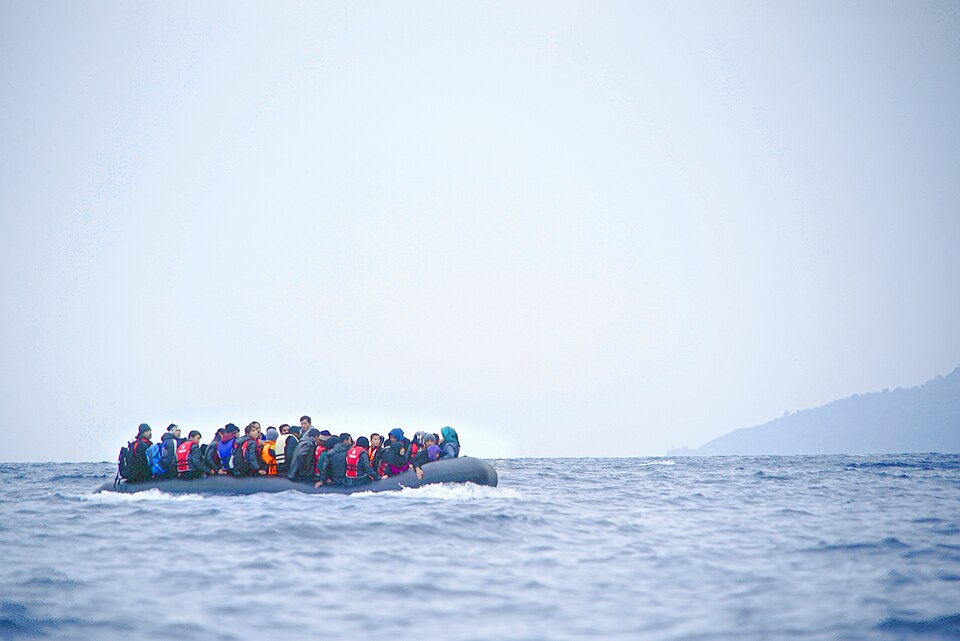
Professor Parker: I think, just building on from what Ruth was saying, that, certainly talking to refugees and asylum seekers, the one thing that you find that they all share is –, and it’s almost like a necessary thing actually – is this collective sense of hope. Even though a lot of the time it’s kind of betrayed at every part of their journeys and life experiences; they’ve just had a series of setbacks and losses. It’s very interesting that people cling onto this idea of a possible future, not even necessarily a better future but the possibility of life, the possibility of safety. This seems to me as fundamental to the human condition when it’s stripped bare of everything else, of all other protections and security and all the rest of it because I think otherwise you’d go mad and, of course, some people do and that’s the really tragic thing. Some people do end up taking their own lives, or whatever, because they can no longer reconcile the horrible situation that they find themselves in with the possibility of a better future. They stop believing in the possibility of a better future because they’ve been so frequently knocked back and injured, harmed, and seen their loved ones experience the same thing. But that’s what drives you on. I think it’s almost a very fundamental life instinct actually at the bottom of it. In a sense we are probably very privileged in not having to just have this resource left because our lives are relatively protected and, you know, supported and not filled with danger, etc. etc. We can indulge in banal and individualistic hope for, you know, better weather on our holiday or whatever that might be but that’s really not going to affect us on an ontological level. Whereas, I think those people who are really marginalised, those people who are really facing violence and denial of their basic civil liberties and rights have to have this to sustain them and keep them going. I think that’s something that’s really quite profound. That’s why it’s not just a wooley concept or just something that’s a philosophical abstraction. It’s this fundamental psychological drive that actually protects you from just ending your life or just collapsing, or going mad.
Dr Kelly: I think that the thing that makes it different from imagination or faith is that it is grounded in experience of things that have worked. Very often when social movements were focussing on these great imaginations of how the world could be better or whatever, people found that too abstract, it was too far away whereas if you had someone who was a migrant who had experienced kindness, they might have experienced a lot of violence but they can hold onto the experiences of kindness. I think that hope is concrete and specific and practical and it builds on experiences. If you’ve never had an experience of love, of collective solidarity, then that’s very hard to hope for.
Professor Roy: I think that the geographer Les Back writes about worldly hope. Hope that builds off of what you have. It’s not to say that you limit yourself to what you have, but that you build off of what you have. Not on an abstraction but in the here and now – in the thick of uncertainty, in the thick of political negotiation – but it’s very worldly in that sense.
Professor Parker: I think that’s right, I mean, Les Back would probably define himself as a sociologist but he does write a lot on the geographical dimension of that [hope]. Particularly in neighbourhoods that have been affected by a tragedy.
Professor Roy: Grenfell?
Professor Parker: Grenfell survivors, meeting survivors’ families, is a really good example of what you mean and again I think it goes back to some of the earlier conversation about a fundamental belief in justice. Not necessarily a formal justice as delivered (or often not delivered) by legal systems in capitalist or other societies, but this more profound sense of social justice. I think this is particularly true for societies that have experienced collective tragedy that has been either propagated or compounded by the state. Often neglect of infrastructure or poor regulation of factories because it’s profitable, you know, thinking about the Bhopal disaster a few years ago. All of those things contribute to this erosion of the basic quality of life, even sometimes the possibility of life in marginalised communities, and they are very aware of this. At the same time, if they don’t act collectively and act in a solidaristic way to raise their voices, to demand accountability, to demand reparations, no one else is going to. That’s the point, isn’t it, that you also sort of have to make your own hope and by making your own hope you make the potential conditions for justice at some point in the future.
Matthew: We’ve discussed Grenfell, and Auschwitz, and refugees facing violence, and Professor Roy, I read your book, Audacious Hope, and while it was full of the positive examples of hope, every one was accompanied by an example of, at best, government incompetence and, at worst, authoritarianism. So, it is difficult to hope when in order to hope you have to see really some of the worst of human experiences, or is it only then when this true sort of political hope can exist?
Professor Roy: That’s such a beautiful question, yes, yes. I suppose in some ways that’s what makes hope as profound as it is. If all was good then hope would be about hoping for better weather on my holiday and hoping for christmas presents and that sort of thing. So I think that does draw us to the underbelly of hope. The lotus blooms in swampland as it was. I know swampland has all sorts of connotations in this day and age but the BJP for instance, their electoral symbol of the lotus was meant to show hope in the middle of the swamp and that sort of thing (just to be clear- I am not suggesting that the BJP is about hope. Rather, they claimed to be the source of hope amidst difficult times…) and so that does go back to your previous question about how hope can be appropriated by all sorts of actors. But sticking with what you are saying, I think that there is an element, obviously, of hope becoming more salient when you are faced by the worst aspects of political and social life: whether it is authoritarianism, whether it is dictatorship, whether it is profound inequalities in society, social injustice. You know that may be dependent on the exploitation of labour or on the marginalisation of people on the basis of their ethnicity, based on skin colour, ethnicity, sexual orientation, or all sorts of things, and I think that hope is necessarily a work in progress against those sorts of things. And I think because of the nature of our world, that even when you have utopian promises, the facts are always that there is grave injustice and a lot of the time these utopian promises actually fail in justice and hope becomes even more salient. In the Auschwitz example for instance, of course the Nazis thought that they were bringing in a utopia of the Aryan race being the supreme race but against that utopia you had the hopes of so many people who were writing poetry against that kind of thing. So that becomes even more salient when you are faced with these awful injustices, so I suppose that the answer to your question is yes, hope does become salient, hope is perhaps always with us, because the world is never a perfect place: there are always troubles to talk about, living with troubles, and we are more profoundly aware of those troubles now. Some would say that those troubles have increased. I am not sure that they have increased but we are certainly more aware of troubles now and I think that we can sort of speak up against it and hope because it’s such an essential part of pushing back against injustice, against authoritarianism, against inequalities (of the capitalist variety as well by the way) and it does require us to recognise that hope stands against and in a complex negotiation with these forces. So my answer would be, on balance, yes: there is an authoritarian underbelly that makes us think about hope and makes thinking about hope so relevant.
Dr Kelly: This makes me think about the UK examples. So thinking about the puzzle in the UK, about why local and subnational institutions in England do not seem to work and why does Manchester work – and Manchester is the one that does, right? There are lots of reasons for that – and you could go into a lot of detail about that – but there was something about standing in the Greater Manchester area immediately after the arena bombing and everyone singing don’t look back in anger. We should talk about collective song. It’s so powerful and you get a sense of people saying ‘we are from Manchester, and we want Manchester to work, and we will invest in our local institutions and vote in our local elections; we care about this place’. I often thought how much is that linked to the IRA bomb or more recently the arena bomb – how much does that collective experience of tragedy do something for people to come around and then has consequences that are not necessarily about that tragedy? Because in Manchester it’s about having a functioning local democratic institution, which doesn’t exist anywhere else in England.
Professor Parker: Yeah, I think that’s a really interesting example, that’s sort of reflected in the fact that a lot of people do spend a lot of time engaged in giving up their spare time in voluntary activities. You know, working for charities or coaching their kid’s football team or whatever. I think those are good practical examples of where, to go back to the earlier discussion, they are not waiting for other people to make the world better, they are just doing it in this very practical way with whatever resources or money or time that they have for themselves. It’s interesting because you have this question about the revolution of everyday life. Some of this is really, when you put it together – and I am not going down the route of the big society or whatever David Cameron does – but that sense of kind of a collective identity, a shared past, a shared set of experiences also around grief and loss. Hillsborough is another example as well (where those families that were ignored and the victims were denigrated by The Sun and the popular press and it took two enquiries but eventually they were found to have been victims of corporate failure and police failure and so on and the victims were judged to have been completely innocent in the loss of life) and that again is a really good example of the tenacity of people, who are basically powerless, to come together and insist that they will get justice for their loved ones and those that they have lost and I think that that is really powerful.
Dr Kelly: What I like about Harsh’s work (on the caravan of love) – he’s a long standing public intellectual in India, he’s been an activist for a long long time – but in this work the caravan of love, he emphasised the importance of collective mourning, that you go around and you grieve together and that that is part of hope and I thought that that is a very interesting thing. I hadn’t really thought of that before and the power, sometimes I think that especially in the work that we do in the centre for applied human rights supporting activists at risk, sometimes there is very little that you can do aside from grieve with someone. If you are talking with an activist from Myanmar at the moment… Collective grief is sometimes the adequate response and that feels like an important part of the work to sustain hope.
…
Matthew: So I had my list of questions and one of the first ones I had was ‘Is hope utopian?’ but over the course of the conversation, if anything, it now seems that hope is almost for the victims of these utopias and these utopian ideas. Each utopia seems to have people who are pushed under and hope seems to be the tool of those people.
Professor Roy: I wouldn’t necessarily put it as ‘victims’ of utopia but yes. People who may be pushing back against utopias or have been, you know, who have been marginalised by these utopias – I mean to me the utopia question is secondary, these are people who really care about a better world, it doesn’t matter about whether they were victims of utopia or survivors or fighters or whatever these are people who just care about a better world. And they may have been victimised by utopia as you were suggesting, they may have been let down by these utopias, betrayed by those utopias, they may even have benefited from these utopias but then they realise that’s not the case. Some of these workers in informal employment, there’s often the argument that capitalism is the best thing for them, because think about the rural women of bangladesh who would otherwise be slogging on the fields of lecherous employers in villages: capitalism has let her come into the factory even though its awful sweatshops so she may have benefited from capitalism but doesn’t think that capitalism is the utopia that she is looking for. So I wouldn’t say victims of utopia. I think these are just people who are wanting a better life and a better future for themselves with utopias if possible, without utopias if necessary, and against utopias if those utopias are coming in the way.

 The York Politics Review
Leave a comment