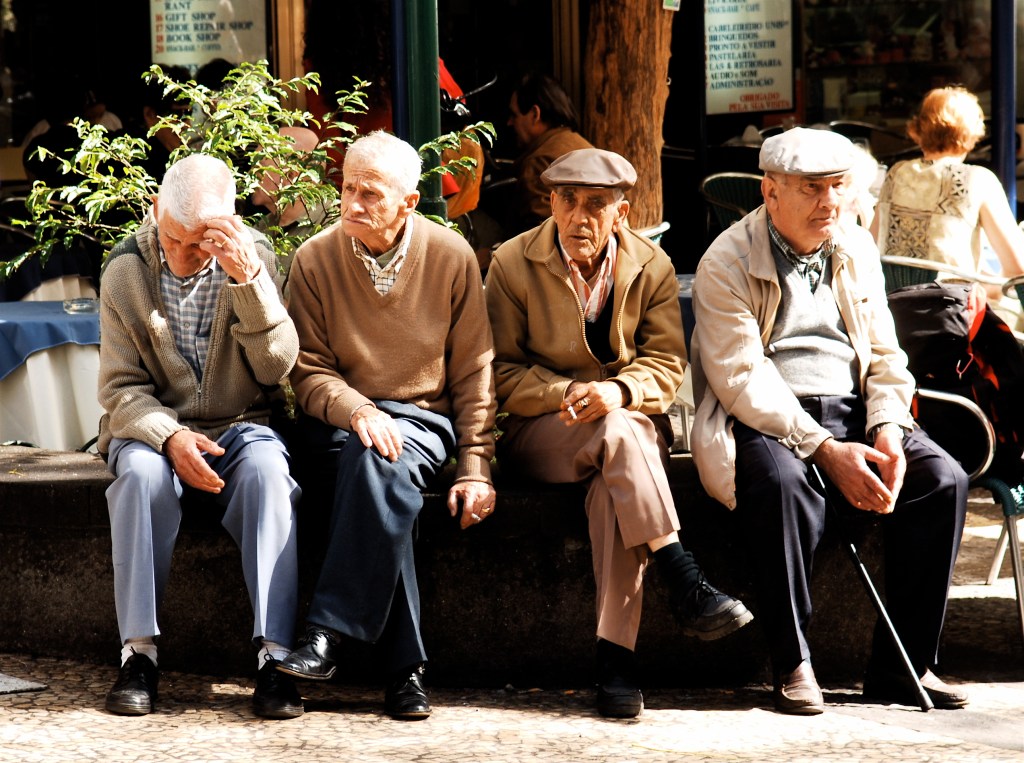
(Image credit: Artis Pupins)
By James Gannon
In an era of unprecedented global interconnectedness, a silent force is reshaping the geopolitical landscape: demographic ageing. As major world powers grapple with rapidly ageing populations, the traditional calculus of international relations and warfare is being fundamentally altered. This demographic shift, characterised by declining birth rates and increasing life expectancies, is not merely a domestic concern but a transformative global phenomenon with far-reaching implications for peace and conflict.
The Global Demographic Crisis
The world is facing a demographic crisis of unprecedented proportions, with major world powers at the forefront of this ageing trend. This shift is driven by a complex interplay of factors that have reshaped societies across the globe.
Advancements in medical technology and healthcare systems have dramatically increased life expectancy and reduced mortality rates across the developed world. While this progress is undoubtedly a triumph for human welfare, it has contributed significantly to the ageing of populations. As people live longer, the proportion of elderly citizens in society grows, placing increased pressure on social and economic systems. Concurrent with healthcare improvements, profound changes in societal norms and structures have led to a prioritisation of employment and career advancement over family formation. This shift has resulted in delayed parenthood and smaller family sizes, contributing to falling fertility rates in most developed nations. The replacement fertility rate of 2.1 children per woman, necessary to maintain a stable population, is now a distant goal for many countries.
While immigration has historically served as a mechanism to offset declining birth rates, many developed nations are experiencing a paradoxical trend of anti-immigration sentiment. This resistance to immigration comes at a time when it could potentially mitigate the effects of ageing populations, as immigrant families tend to have higher fertility rates. Furthermore, the impacts from societal ageing risk giving way to further anti-immigration sentiment; taking the U.K. as an example, it is a common attack line against immigration that it will cost services like the NHS millions to accommodate new arrivals, when in reality, the NHS is under severe pressure due to an ageing population in which there is no social care to support them. Due to the crisis institutions like the NHS have seen a rapid growth in anti-immigrant population sentiment that paradoxically prevents the possible key to its survival.
The Multifaceted Effects of Ageing Societies
As populations age, states are compelled to allocate an increasing proportion of their resources to elderly care and welfare programmes. This shift in resource allocation places significant strain on national budgets and can lead to intergenerational tensions as younger cohorts bear the financial burden of supporting an expanding elderly population. The economic implications of ageing societies are profound and multifaceted. As the workforce shrinks and a larger proportion of the population enters retirement, productivity and GDP growth face downward pressure. This economic contraction occurs precisely when increased resources are needed to support the ageing population, creating a challenging fiscal environment for governments.
Perhaps most critically for international relations, ageing populations have a direct impact on military capabilities. The pool of potential military personnel shrinks as the population ages, and the diversion of funding from defence to healthcare and social services leads to a substantial decline in material military power. Again, we needn’t look further than our shores to see this narrative played out – it wasn’t so long since former Labour leader Jeremy Corbyn called for the scrapping of trident and other military assets to further Britain’s decaying infrastructure. Corbyn wasn’t the first, and he likely won’t be the last, as multiple countries across the world are left balancing whether or not to cling to their position on the world stage or relinquish it to calm domestic political storms caused by mass ageing.
The Uneven Impact of Global Ageing
The effects of global ageing are not uniformly distributed, with some nations poised to maintain their power while others face significant decline.
The United States stands out as one of the least affected by the ageing crisis, largely due to its optimal replacement rate and high levels of immigration. This demographic resilience positions the U.S. to potentially maintain or even enhance its global power in the coming decades. Similarly, the United Kingdom is projected to see continued population growth, albeit at a slower pace than the U.S. In stark contrast, many pro-Western nations in Europe and East Asia are on track for significant population ageing and decline. Japan and South Korea, with some of the lowest fertility rates globally, are expected to face particularly severe demographic challenges. These nations may struggle to maintain their economic and military influence as their populations shrink and age.
Revisionist powers, like most of the developed world, are also experiencing the perils of population decline. Russia faces a particularly stark demographic outlook, with projections suggesting a population decline of 17.8% over the next half-century, and such an acute threat has led to Putin his left labelling population decline as “the greatest crisis facing our country”. This demographic contraction raises serious questions about Russia’s ability to sustain its revisionist foreign policy, particularly in regions like Ukraine, as its military and economic power potentially wane. Perhaps the most dramatic demographic shift is projected for China, whose population is expected to halve by the end of the century. Such a profound change in China’s demographic makeup could significantly alter its economic and military trajectory; known to be the “world factory”, China’s power on the international stage is its ability to produce and build key products and infrastructure for current and emerging powers; its soft power projection relies upon initiatives such as the Belt and Road, but can this project be feasible when its production capability is forecast to half? Can it continue to build projects for emerging developing states when its infrastructure will crumble under its ageing crisis?
However, it is important to note that technological advancements, particularly in health and defence, could mitigate some of the impacts of ageing populations. Automation and artificial intelligence may reduce the need for human labour in both economic and military spheres, potentially allowing ageing nations to maintain their power despite demographic challenges; we have already seen the implementation of pilotless air units in most of the world’s air forces, and countries such as Israel have implemented AI targeting systems in their drone programme. Assuming this trend of mechanisation, particularly with the advent of AI, serves to mitigate the impacts we’ve explored, then the balance of power may instead be determined by machine capabilities as human populations shrink and diminish.
A Geriatric Peace?
As the United States and, to a lesser extent, the United Kingdom maintain their demographic vitality, the world order may shift back towards unipolarity. With other major powers potentially constrained by the demands of caring for ageing populations, the U.S. could find itself in a position of unchallenged global leadership. However, the path to this potential “geriatric peace” may not be smooth. As evidenced by Russia’s actions in Ukraine and growing tensions over Taiwan, nations facing demographic decline may be motivated to take aggressive action while they still can do so. This “act while we can” mentality could lead to increased conflict in the short to medium term as ageing powers attempt to secure their interests before their decline becomes irreversible. Russia’s justifications for protecting ethnic Russian populations in Georgia and Ukraine are the perfect example of this: the demographic crisis Russia is facing has arguably created a siege mentality where they seek to both recover their populations and thus offset forecast decline before it’s too late, but then again, considering the sheer loss of Russian life due to the war in Ukraine, the validity of such a strategy comes into question.
While the traditional powers of the 20th and early 21st centuries grapple with ageing populations, other regions of the world are experiencing significant population growth, potentially reshaping the global order. Africa stands out as a region of extraordinary demographic growth, with its population projected to increase by over a billion by 2100. This growth could translate into significant economic and geopolitical power, with countries like Nigeria potentially emerging as new global players. India, already the world’s most populous country, is on track for continued population growth. Coupled with its nuclear capabilities and growing economic clout, India’s demographic vitality positions it as a potential superpower in the coming decades. At the same time, it would be a mistake to discount that these countries would first and foremost face considerable regional challenges before they begin to consider the current world order. Africa, facing the threat of climate change, resource scarcity, corrupt regimes and a ballooning population, has very real potential to become a hotbed for inter-African-state war, assuming bodies such as the African Union or ECOWAS do not bridge these divisions. Likewise, India faces regional challenges with Pakistan and China before it could progress to take on the assumed American hegemony that remains after global ageing.
Therefore, the global ageing crisis presents a paradoxical future for international relations. On one hand, the demographic decline of traditional powers like Russia and China may lead to a more stable, unipolar world order dominated by the demographically resilient United States. This shift could potentially usher in an era of reduced great power conflict as ageing nations focus inward on managing their demographic challenges. However, the path to this potential “geriatric peace” is fraught with dangers. In the short to medium term, we may witness increased aggression from declining powers seeking to secure their interests before their demographic windows close. Moreover, the rise of new powers in Africa and Asia, driven by population growth and economic development, could introduce new sources of global competition and conflict.
The impact of technology remains a wild card in this demographic equation. Advancements in automation, artificial intelligence, and healthcare could potentially mitigate some of the effects of ageing populations, allowing nations to maintain their power despite shrinking workforces. However, these same technologies could also exacerbate inequalities between demographically vibrant and ageing nations. Ultimately, the global ageing crisis underscores the need for a fundamental reimagining of international relations. Traditional metrics of national power centred on military might and economic output may become less relevant in a world where demographic vitality is increasingly crucial. Nations will need to adapt their foreign policies to account for these demographic realities, potentially prioritizing cooperation and integration over competition and conflict.
As we navigate this demographic transition, policymakers and scholars must grapple with several key questions: How can ageing societies maintain their economic dynamism and military capabilities? What role will immigration play in shaping the demographic futures of nations? How will the rise of new demographic powers reshape global institutions and norms? The answers to these questions will shape the contours of international relations for decades to come. While the demographic trends point towards a potential “age-old peace,” the journey to that peace may be marked by periods of instability and conflict. As such, managing this global demographic transition will be one of the most critical challenges facing the international community in the 21st century.


 The York Politics Review
Leave a comment