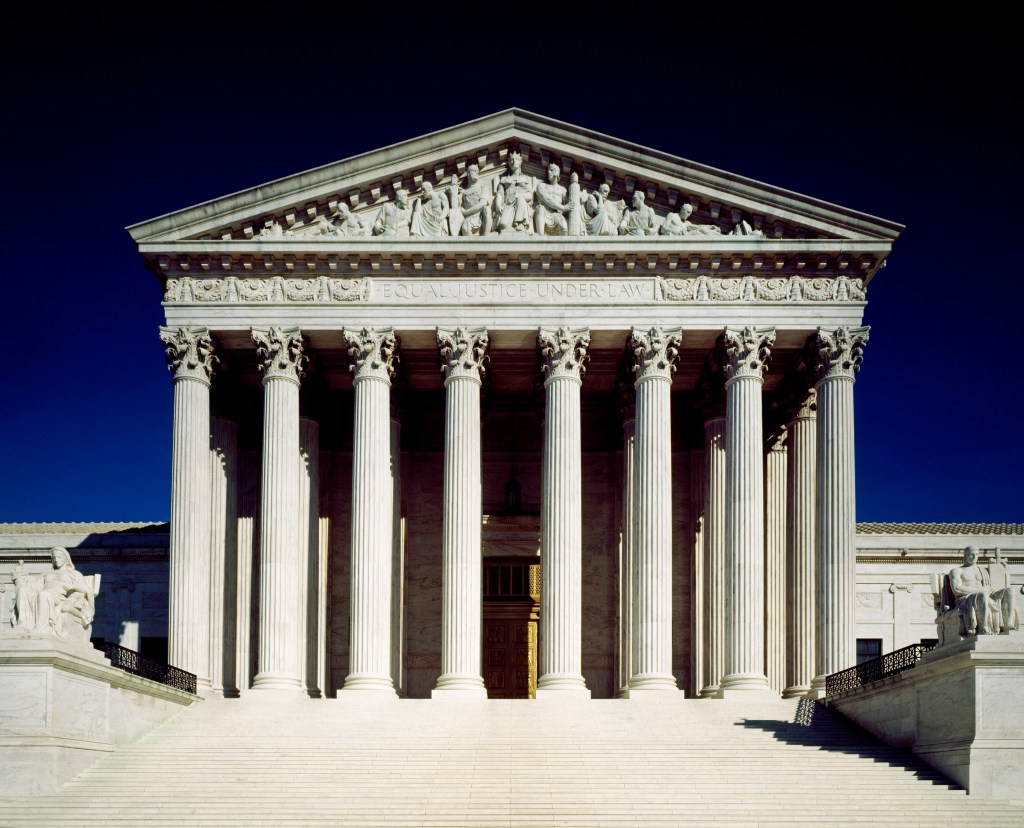
The Supreme Court, Citizens United, and the Subversion of the First Amendment
By Isaac McAreavey
(Credit: Rawpixel)
A fundamental belief of every democracy is that every person has an equal say on who is elected and runs the government; however, the Citizens United vs Federal Election Commission (FEC) ruling brought into question just how fair American democracy is.
In order to understand what Citizens United vs FEC overturned (as well as the court’s intentions behind the ruling) some context is required. The case arose in 2008 when a conservative campaign group called Citizens United released a documentary that was heavily critical of Hillary Clinton. Just before the primaries, where she was a candidate, they sought to make it available through video on demand. However the Federal Election Committee (FEC) prohibited them from doing so, citing the Bipartisan Campaign Reform Act (BCRA). This was an act passed in 2002 that sought to address the increasing amounts of “soft money”, or unregulated donations, that were intended for general party purposes, not a particular candidate (intended being the key word). The BCRA also restricted “electioneering communications” so that wealthy companies or unions couldn’t use their own funds to aid independent political campaigns. The Citizens United documentary was seen as violating the BCRA, which banned any independent broadcast, cable, or satellite advertisements that clearly endorsed or attacked a candidate for federal office that was made within 30 days of the primaries.
The case was eventually brought to the majority conservative Supreme Court where they ruled 5-4, along party lines, in favour of Citizens United. It overturned specific sections of the BCRA, crucially, restrictions on independent organisations fundraising. Justice Anthony Kennedy wrote in the ruling that limiting “independent political spending” from corporations and other groups violates the First Amendment right to free speech. The ruling provided the groundwork for the creation of ‘independent expenditure-only political action committees’, better known as ‘Super PACs’. Political Action Committees or PACs had been around since the 1940s and were allowed to raise money to donate directly to campaigns or other PACs with the aim of helping a candidate win an election. ‘Super PACs’ differ by their ability to raise unlimited amounts of money, however, they cannot coordinate with candidates or donate directly to campaigns. Thus, the ruling saw the advent of Super PACs, opening the floodgates on political spending.
Basis of the Ruling
The argument that financing campaigns is an expression of freedom of speech is a perfectly legitimate one; however, there’s clearly a tension between this freedom and the vast influence a wealthy individual or corporation can have on politics; almost nullifying what influence an average person can wield. In their defence, the Supreme Court clearly recognised that unlimited, unregulated donations would be a problem, hence why the ruling was based on two key aspects; the lift on fundraising caps was only for independent organisations and these organisations also had to disclose where their donations originated from. Where the court fundamentally went wrong, however; they didn’t anticipate how loose the categorisation of being independent would be or how easy it is for individuals to find loopholes around finance disclosure. The ruling of just 9 justices’ so poorly anticipated the effectiveness of the law that they’ve irrevocably altered American politics.
Flawed Assumptions and the Myth of Independence
Although Super PACs are meant to act independently of the campaigns and there is supposed to be no communication, this rule is essentially not enforced. In reality, it’s extremely difficult to define what counts as communication or collaboration so, as a result, this requirement is almost never checked or enforced (effectively allowing unlimited fundraising by the campaigns). For example, since 1999 the FEC has conducted a total of three investigations into alleged coordination, in two of the three instances they were found guilty and fined a pitiful $26,000. On top of this, there is no agreed upon fine and, since the FEC committee (which decides the fine) is split with 3 Democrats to 3 Republicans, it’s unlikely that the situation will improve in the future. Furthermore, checking and legislating for communication between campaigns and independent organisations is especially tricky with the advancement of communication technologies such as smartphones. This oversight has seen campaigns and Super PACs coordinate ad placement, messaging, and timing consistently in every election since the ruling.
For example, Super PACs often release ad-buy schedules and other strategic information publicly, effectively signalling their plans to campaigns without crossing legal lines. The emergence of ‘single-candidate Super PACs’ — PACs that exist solely to support a specific candidate — illustrates this issue. These PACs are often run by former campaign aides or close allies, providing them with an intimate knowledge of the campaign’s strategy. In many cases, campaigns and PACs share themes, messaging, and timing, creating the impression of a coordinated strategy. Although these interactions may not technically constitute direct coordination, the result is nearly identical to full campaign control over the Super PACs’ activities. Super PACs have effectively become arms of political campaigns, arms with access to unlimited funding. As Campaign legal centre Attorney Paul Ryan said, “the whole purpose of the coordination rules is to prevent a candidate from evading campaign contribution rules. Without them, the contribution rules would be pretty meaningless.”
The Rise of Dark Money
A more sinister oversight has been that of independent organisation finance disclosure. The Court expected that donors would be required to disclose contributions to independent groups, making it possible for voters to know who was funding which political messages. However, in practice, wealthy donors have been able to work their way around the law, setting up shell companies or organisations that themselves are not required to disclose where their funds come from and donating to the Super PACs through the shell companies. The money received from these entities is referred to as ‘dark money’ and in the 2024 presidential election over half of the $4.5 billion dollars in outside/independent spending was so-called ‘dark money’.
This raises a myriad of concerns over influence from individuals or foreign countries trying to shape the US election to their benefit, thus to the detriment of the average US voter. It also can work to erode trust in the institutions of a country, if citizens sense their voice is being drowned out by a tidal wave of dark money, then they might feel that democracy and the government isn’t working for them. Such apathy is already apparent, caused by an ocean of dark money that could further open the door to more extreme candidates.

(Credit: Andy Thrasher)
The Road Ahead
The Citizens United ruling has clearly reshaped American politics in a way that the Supreme Court did not foresee, Americans with vast wealth now wield disproportionate influence on which candidates win as well as the policies they pursue. Thus undermining the fundamental democratic ideal of equal representation and leaving many citizens feeling disenfranchised and disillusioned.
There are some proposals to reform campaign finance such as the Freedom to Vote Act which aims to expand disclosure requirements and tighten rules regarding what counts as independent spending. Reformers argue that bills like this would help mitigate the influence of wealthy donors and make elections fairer. However, it’s questionable as to how stricter reform will be enacted as the Supreme Court has a 6-3 conservative majority that is likely to hold. Additionally, there have been concerns about justices like Clarence Thomas receiving massive political donations from wealthy individuals wanting to preserve their influence in politics. The senate is also now almost always in gridlock so bills such as the DISCLOSE Act, which sought to enforce more stringent finance disclosure rules, have simply fallen flat. So, it’s a stretch to think that anything will be changing anytime soon.
Conclusion
Overall, there is not a clear answer on how to legislate for the conflict between to what degree individuals can donate to an election campaign and preserving the ideal that everyone has an equal say in a democracy. However, what is clear is the Supreme Court ruling was so flawed that it blew wide open campaign spending with barely any safeguards to the detriment of almost every American citizen.



 The York Politics Review
Leave a comment