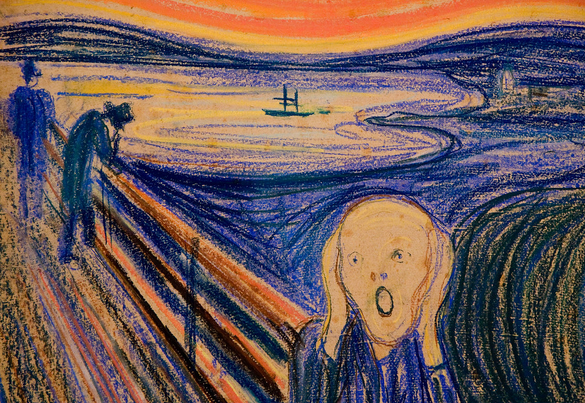
(Photo: CCL)
By Scarlett Ives – Contributor
Conservative politicians and reporters have increasingly been using transgender identities to reinforce their ideals surrounding gender norms and to elicit an emotional response from their audience. Despite claims by some conservatives, it is clear that transgender people and their communities are not dangerous. However, the attention that these commentators often disproportionately pay to these subjects is purposed to exploit people’s fears, contributing to a moral panic that endangers the safety of many people in the transgender community. In writing this essay, it is crucial to acknowledge my own identity as a cisgender woman. While I have undertaken research and seek to provide a thoughtful analysis of transgender issues, it must be acknowledged that my gender identity inherently limits my understanding of this topic this is because I have never and will never experience the challenges and complexities of being transgender.
Moral panic is a social phenomenon characterised by when the general public views something as a threat, with the nature of the perceived threat becoming exaggerated and distorted as experts start to weigh in, thus legitimising the issue’s status as a threat and magnifying it when, in reality, the subject is not as much as an issue as it may appear or it may not even be an issue at all (Cohen, 1972). As the media sensationalises the subject, moral panic can significantly affect policies and contribute to concern, fear, and hostility amongst the general public and politicians.
A key example to demonstrate this, outside of the issue of transgender identity, would be the fuel crisis of 2021 in the UK, in which people feared a petrol shortage after the media continuously reported a lack of HGV drivers due to Brexit and the coronavirus. However, In reality, there was no such fuel shortage (BBC, 2021). But because the media fanned the flames and instilled panic in the public, there was a chain reaction which resulted in people queuing for hours to fill their cars up.
When this moral panic extends to transgender individuals, it involves misunderstanding gender identity. Thus, it is essential to clarify what one means when discussing gender, sex, and transgender identity. The World Health Organisation (WHO) defines gender as the characteristics of men and women that are ‘socially constructed’, while sex refers to the ‘biological and physiological characteristics’ (Kari, 2019, p.1). The American Psychological Association (APA) also contributes towards our understanding of gender as they provide an understanding of the term transgender, explaining it as an umbrella term that describes individuals whose ‘gender identity, gender expression, or behaviour does not conform… with the sex which they were assigned at birth’ (American Psychological Association, 2023).
Worldwide, conservative politicians and news presenters are spreading fears of indoctrination into the so-called ‘gay agenda’, thus spreading these frankly unsubstantiated fears to the general public. People have criticised commentators such as Piers Morgan and Liz Wheeler for stoking hatred of transgender individuals as they compare the manmade social construct of being transgender to being transracial, with Wheeler suggesting that if society begins to accept transgender identities, then transracial identities will also be accepted (Young America’s Foundation, 2023). Wheeler references the infamous Rachel Dolezal, a white woman who claimed to be black, claiming that society widely accepted Dolezal’s racial identity as a consequence of society’s acceptance of transgender people, which is not the case as Dolezal lost her job and eventually had to change her name as she was unable to get work anywhere after being named the third most hated person in 2015 (Dewey, 2015).
However, as Wheeler has a large platform and audience, the rhetoric she espouses about transgender identity seeps into the general public’s psyche and generates a dangerous atmosphere for transgender people as they fear that those on the right might attack their gender identity. Such is especially true when people expand this to compare transgender individuals to transage, which invites criticism from the public, who claim that transgender identities encourage paedophilia. Such comparisons hark back to comparisons made by individuals like Rick Santorum during his time in the Senate (HRC Staff, 2022).
In the future, comparisons between transgender individuals and paedophiles could likely be regarded with the same disdain and embarrassment as people do with the comparisons made by Santorum. Another crucial part of Cohen’s understanding of moral panic is informed by what Becker calls the ‘moral entrepreneur’, a group or individual who enforces societal norms and values (Becker, 1963). Moral entrepreneurs have played a key role in how the general public perceives the transgender community; this is well represented by comments made by Trump, such as those on Twitter (now known as X) claiming that transgender people would become a burden to the military if they are enlisted (Trump, 2017).
As a result, those who followed Trump started to express their anger towards the transgender community and created an environment of hostility (Penpin-Neff & Cohen, 2021) as he created an impression that this type of behaviour towards such a marginalised group was acceptable. Back in the UK, Prime Minister Rishi Sunak has also acted as a moral entrepreneur in creating an unsafe
atmosphere for transgender people when someone leaked footage of him mocking transgender people to PinkNews, stating, “Like me, you can probably see that he was trying to convince everybody that women clearly had penises. You’ll all know that I’m a big fan of everybody studying maths to 18, but it turns out that we need to focus on biology.” (Williamson, 2023). More recently, the 2023 Conservative Party Conference has gone viral for the rampant anti-transgender rhetoric spread by leading Conservative politicians such as Suella Braverman and Sunak, again creating an allowance for hostility towards the transgender community.
These moral entrepreneurs impact societal norms and values and can exert these opinions into the laws and policies by which the general public must live. In the UK, for example, current Home Secretary and previous Attorney General Suella Braverman stated that it is lawful to misgender, dead-name, and even reject transgender children (Badshah, 2022). Meanwhile, in the US, the infamous ‘Don’t Say Gay’ law prohibits teachers from discussing LGBTQ+ issues in the classroom (HRC Staff, 2022), further stigmatising the community and creating an unsafe environment for LGBTQ+ children to grow up in.
It is currently a confusing time as conservatives continue to appeal to freedom of speech whilst they attack those who even insinuate that they might be transphobic (Bandini and Maggi define it as “emotional disgust toward individuals who do not conform to society’s gender expectations” (Bandini & Maggi, 2014, p.49)). However, it is essential to remember that freedom of speech does not equate to freedom from consequences or healthy, fact-based discussion. To conclude, this article has demonstrated the level of influence that moral entrepreneurs have over discourse in today’s society and how they are able to influence the conclusions drawn by society on social and moral issues. Conversations centered on nuance and compassion need to be at the heart of conversations discussing the lived experiences of transgender people, and the media, politicians, and the public need to be aware of the harm they may cause by sensationalising or misrepresenting these issues.



 The York Politics Review
Leave a comment