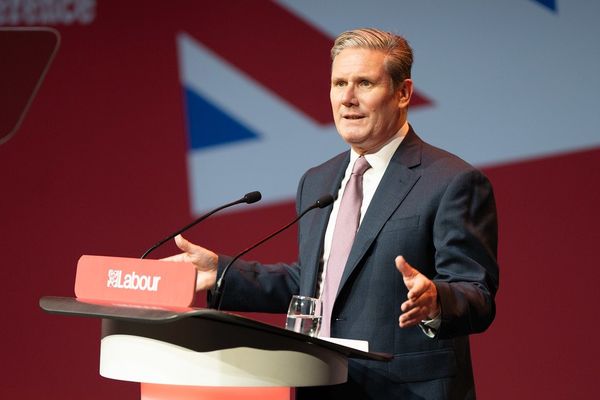
(Photo: CCL)
By Evan Odgen – Contributor
Early autumn means the political parties attend their national conferences, a chance for them to, traditionally, discuss and outline their policies and direction for their party but also to make their pitches to the general public. The Conservative party conference was held in Manchester between the 1st and the 4th of October, and it arrived with its fair share of controversy, depending on where your political allegiances lay, of course. However, the week after, all eyes turned to the man who is currently leading in the polls, leader of the formal opposition, Sir Keir Starmer, as he was expected to not only deliver a key speech to his party members but also draft a response to Prime Minister Rishi Sunak’s speech and spell out his general election pitch to the British electorate. This article attempts to analyse Starmer’s speech to understand his intentions, who he is trying to appeal to and how effectively his proposals might be interpreted. Shadow governments are called governments in waiting because they are expected to be formed as the future government, ready to take power at any moment. The critical focus of the article is on whether Sir Keir Starmer (the man deemed by many as Britain’s future PM) is actually acting like a prime minister in waiting.
Labour has always traditionally been the party of the working class; however, at the 2019 general election, the Conservatives were able to win many of these votes from Labour in an event known as the fall of the red wall. As such, it is vital for Starmer to regain these lost votes and the trust of the people. His speech begins by mocking the Tories through football, stating to conference that he promises to make no more football jokes but then offers his sympathy to the people of Manchester, not because of Arsenal’s one-nil victory over Manchester City two days earlier, but for the “Circus they had to host last week”. Starmer was, of course, referring to the Tory party conference. Football has always been considered a working-class sport, and Starmer’s clever ability to link football to politics helps to present him as a ‘man of the people’. His relationship with football is something he has been pushing heavily in his campaign, often posting videos of his love for playing the game every week and using it as an example of how working people have lost the ability to participate in things they enjoy due to the cost-of-living crisis. He argues that the Tories’ “project will crash against the spirit of working people in this country, and they are the source of [his] hope.” Here, Starmer places working people at the heart of his campaign. He is pushing the idea that Labour is the only party to stop the Tories from damaging working people’s lives. He cements this by stating that Britain has two stories of the last 13 years, one of Tory chaos and failing working people, the other where the public never let each other down, always supporting each other and that a Labour government will do the same.
“Conference, we have to be a government that takes care of the big questions so working people have the freedom to enjoy what they love. More time, more energy, more possibility, more life.” Here, Starmer shows that he is prepared to tackle the cost-of-living crisis for all, allowing people to go from survival mode to more time for leisure and family life. His plea to working people can be summed up in the following quote: “at some point in your life, many people here will have heard a nagging voice inside, saying no this isn’t for you. You don’t belong here. You can’t do that. Working class people certainly hear that voice, trust me. In some ways it’s the hardest class ceiling of all. But conference, imagine if instead a whole country said you do belong. Imagine if a whole country said we back your potential. Imagine if a whole country commits, properly, to unlocking the pride you have for your community”. Starmer is showing that he is prepared to build a Britian that is dedicated to supporting and economically elevating working people. Ultimately, this shows he is taking the fight against the Tories head on, where Sunak’s speech consisted strongly of themes of family, traditional values, culture wars and tackling immigration in order to hold on to a strongly Conservative voter base. Starmer presented a serious economic vision, proving himself and the Labour party as a Prime Minister and government in waiting.
A key play of Starmer’s speech was to Tory voters, presenting their own party as a party of chaos and antithetical to everything they believe in, hoping to reel in disgruntled Conservative voters. Historically, the Tories attacked Labour as the party of economic chaos, but following the tumultuous era of Johnson and Truss, Starmer is attempting to reverse this narrative and do the same to them by parading Labour as the party of fiscal responsibility, service and conservation against the back of a Conservative government that has represented instability. He mentions the idea of service and stability throughout his speech, service to the country and stability of institutions and the economy, which has always been a large part of Conservative ideology. He cites, “And conference, this new path can only be walked by a new party. A changed Labour Party. No longer in thrall to gesture politics. No longer a party of protest. A party of service.” “The bond of respect that comes from service is precious.” “We’ve dragged this party back to service. We can do the same for politics. The only remedy: Labour stability.” His clever pitch to those Tories who feel left behind by their party or displeased with a lurch to the right and those who feel they have failed in its mission of service and stability over the last 13 years. “So, if you are a Conservative voter who despairs of this, if you look in horror at the descent of your party into the murky waters of populism and conspiracy, with no argument for economic change. If you feel our country needs a party that conserves. That fights for our union. Our environment. The rule of law and family life. The careful bond between this generation and the next. Then let me tell you Britain already has one. And you can join it. It’s this Labour Party.” Here, Starmer lists traditional conservative values and describes how the Conservative government has failed to protect them. Our union: with growing calls for Scottish independence and the dominance of the SNP in Scotland. The fight for our environment with Rishi Sunak’s retreat on climate policies and the net zero target. The respect for the rule of law: with their illegal parties held in 10 Downing Street during lockdown. The cost-of-living crisis, how it has damaged family life and livelihoods that have turned to survival mode, and the careful bond between this generation and the next, with Starmer’s central theme of getting Britain’s future back and a long-term plan for the nation, a line that will appeal to very Burkeman Conservatives who believe in the organic society. Starmer is presenting a Labour renewed and a Labour ready to take power.
Finally, the slogan written all over the walls behind him at the conference mentioned multiple times as the centrepoint of his speech, “Britain’s future”. This slogan featured numerous times throughout his speech, driving home the message that the mission of his Labour government would be to get Britain’s future back, combating the Tories’, as he describes, short-term ‘sticking plaster politics’ to solve Britain’s issues, and portraying to the nation his Labour governments true long-term vision going beyond just fixing Britain’s current issues but using this to build the foundation for the future of Britian. He often mentions how he wants to see cranes in the sky and drills in the ground as he touches on some of the UK’s most pressing issues, like promising to build 1.5 million new homes, ensuring housing should be a privilege of the many, not a luxury of the few. He discusses taxing private schools to fund mental health services, this being a high-priority issue to the public, setting up a national renewal fund to create public and private co-operation, ensuring the public share the rewards, a real living wage to ensure the end of striking workers dissatisfied with the level of pay vs inflation, fiscal responsibility being non-negotiable, and finally reforming and supporting the NHS, bringing it from its knees, funding it through taxing people with non-dom status. But Starmer doesn’t just want to invest ina the NHS, he reassured the conference and the nation that he wants to reform it and ensure it has a long-term future. He calls this “national renewal”. He argues that the Tories created a decade of national decline, and it is time for Labour to create a decade of national renewal. Starmer is serious about his plan for government, and he wants to create a dividing line between his party and the Conservatives. He argues the Tories have caused Britain’s decline, whereas his party will be the reason Britian has a future.
In conclusion, Sir Keir Starmer’s speech was effective at portraying him as a viable candidate for Britain’s next leadership. His speech was an effort to show seriousness and maturity in the face of what many would describe as there being a lack of in the current government. He makes important attempts at re-acquiring the British working-class vote, something that was seen as lost during the 2019 general election and he stresses their vote will be key to Labour regaining power in the next general election and they will be at the heart of his vision for Britain’s future. He makes a tactical play to attract dissatisfied Conservative party voters by presenting Labour as truly standing up for values such as service, family, and the rule of law. This echoes the plans of Tony Blair’s shadow government in 1997 as they made moves to charm centre-right voters in order to get the ballots necessary to win in a landslide. And finally, Starmer presents his vision to the nation, a plan that will ensure a long-term future for Britian, a decade of national renewal post decline as he describes it. There is a possibility that this is the last conference before the next general election and Sir Keir Starmer has laid his cards out on the table to show that he is a Prime Minister of a party just waiting to take power.

 The York Politics Review
Leave a comment